How are Braille and military service connected?
Internet, microwave ovens, superglue, disposable menstrual pads, Braille system... What do they have so much in common that it allows to have all in one line? To a lesser or greater extent, all these inventions have their roots in military service. What? You’ve never heard Braille having been a soldier? Sure. He never was. But he was a very attentive student whose best wish was to be able to read, write, and communicate with the world when being blind.
Curiosity killed the cat…
Louis lost his sight as a kid, a very curious kid who wanted to know badly how various instruments and tools his father used worked. The instruments were long and sharp, and the 3-year-old toddler was too quick when trying to play with them. That’s what resulted in Louis’s complete blindness by the time he turned five.
…but satisfaction brought it back!
It was probably the only time when Louis would establish contact with a military worker, although retired.
His name was Charles Barbier. When part of the French artillery, the man became interested in alternative writing forms like shorthand writing, phonetic scripts, codes for secret communication, and penless methods of sending messages. He studied systems used in different circumstances by different groups of people (e.g., soldiers for night writing, deaf or blind people in everyday life, etc.), and came up with his own innovations. Barbier did not mean them specifically for military service but he did encourage such application, too. His main aim was to make both reading and writing easier for poor people and those having impaired hearing or vision.
Barbier’s first attempts to contact the Royal Institution for Blind Youth were either directly rejected or silently ignored for personal interests and fears of the school directors. After two years he finally managed to reach the students with a specifically developed system of 12 embossed dots instead of regular letters. And they enjoyed the innovation!
Louis Braille was the first one to start speaking about the pitfalls of that system:
- 12 dots took more space than a fingertip could cover, so the process of reading slowed down;
- there were no numbers and no punctuation marks.
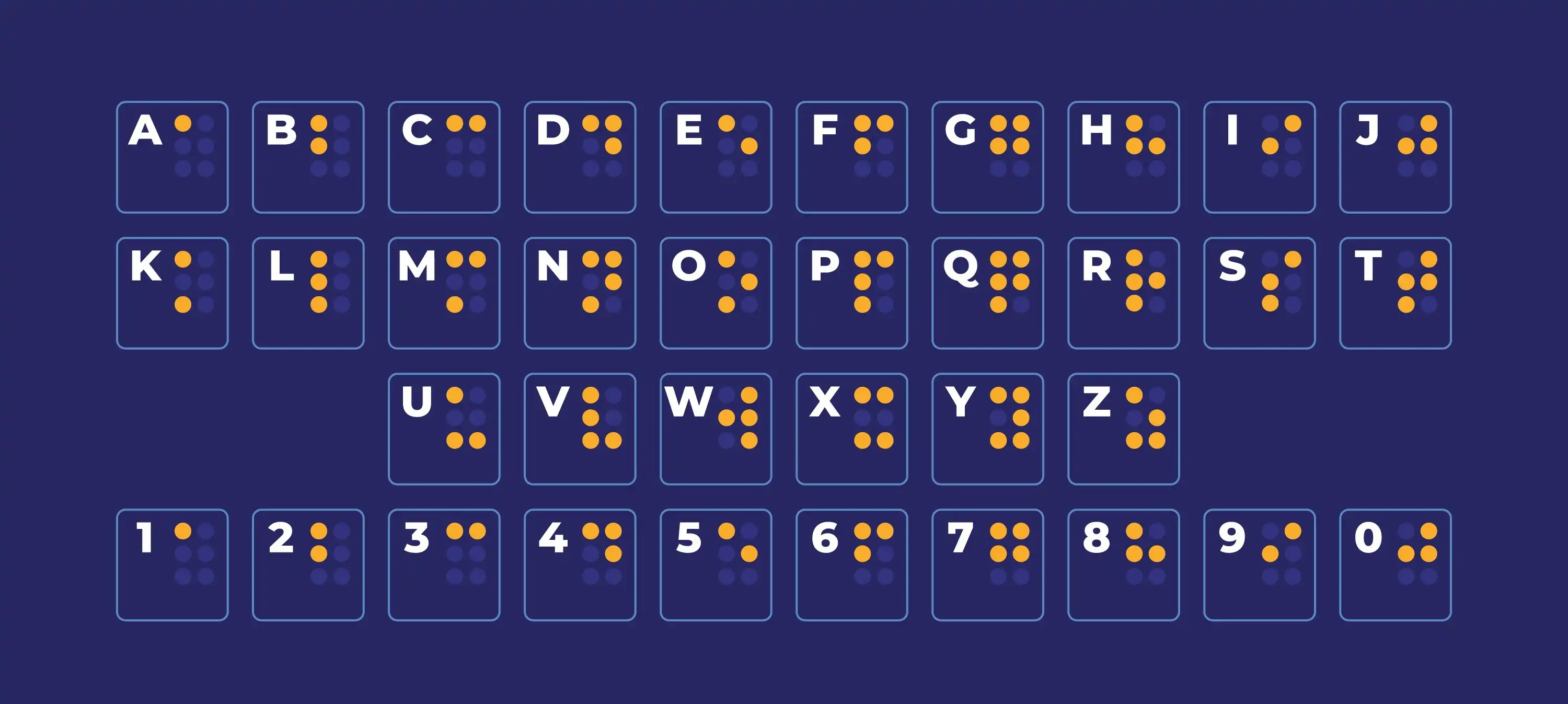
Several years later, in 1729, Braille presented his own system of 6 embossed dots based on the one Barbier had developed. Braille's script is still in use today and has also been adapted for mathematics and musical writing!
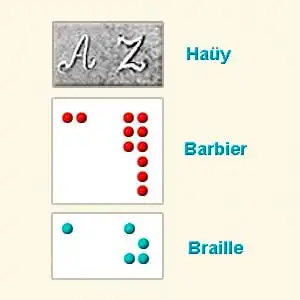
A comparison of three methods of printing for the blind - three forms of the letters "A" and "Z".
Image by SteveStrummer - Own work, CC0, Wikimedia Commons
Barbier discovered Braille's system four years after it had been published and felt ...absolutely happy. Even though initially he had no idea about who Braille was, his friendly letter included congratulations and apologies for not using his system yet.