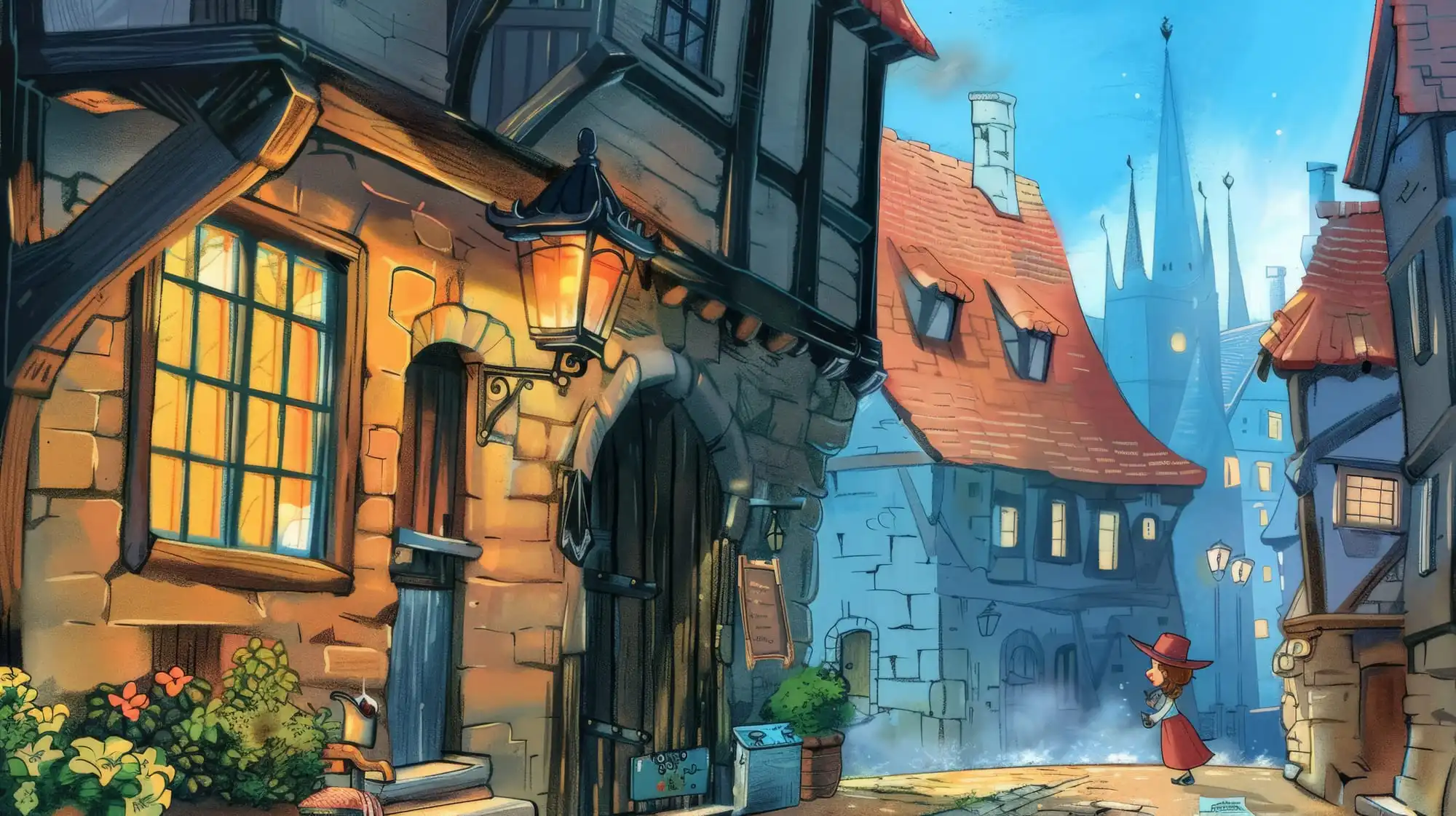
What fairy tale do you remember best?
If The Snow Queen, The Little Tiny or Thumbelina, The Little Mermaid, or The Princess and The Pea are among the first coming to your mind, your childhood must have been enlightened with works by a Danish man recognised as a "national treasure" during his lifetime.
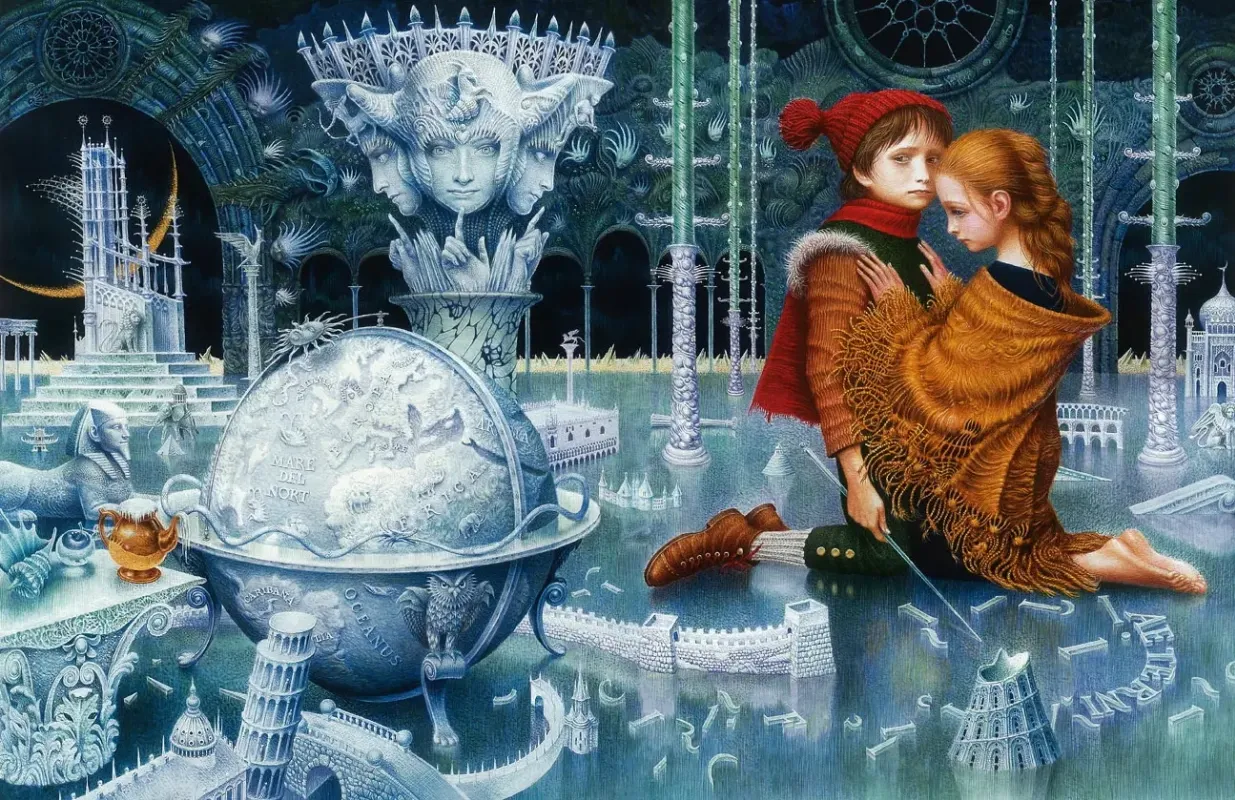
"The Snow Queen" illustration by Vladyslav Yerko. ©Image by A-BA-BA-HA-LA-MA-HA Publishers.
The one fairy tale which would best describe Hans Christian Andersen’s life is The Ugly Duckling which he authored and which he himself viewed as somewhat autobiographical – he, a single child of poor parents only one of whom was literate, would once have a dinner with the King’s family, finding it hard to believe.
Andersen’s road was not straight, and even though he did get basic education at school, his dreams, imagination, feelings, and first-hand experiences were for him of greater importance than academic knowledge.
Imagination is more important than knowledge. For knowledge is limited, while imagination embraces the entire world.
Albert Einstein
Albert Einstein would make this statement about 100 years later explaining such worldview by knowledge being limited by nature. But what did fairy tales and imagination mean to Hans Christian Andersen as a writer?
Dreams
Hans Christian Andersen was a shy and delicate child who would often stay alone dreaming rather than spend time with other boys and girls. The dream to change his life was not the one he imagined but the one prompted by a woman he’d only seen once.
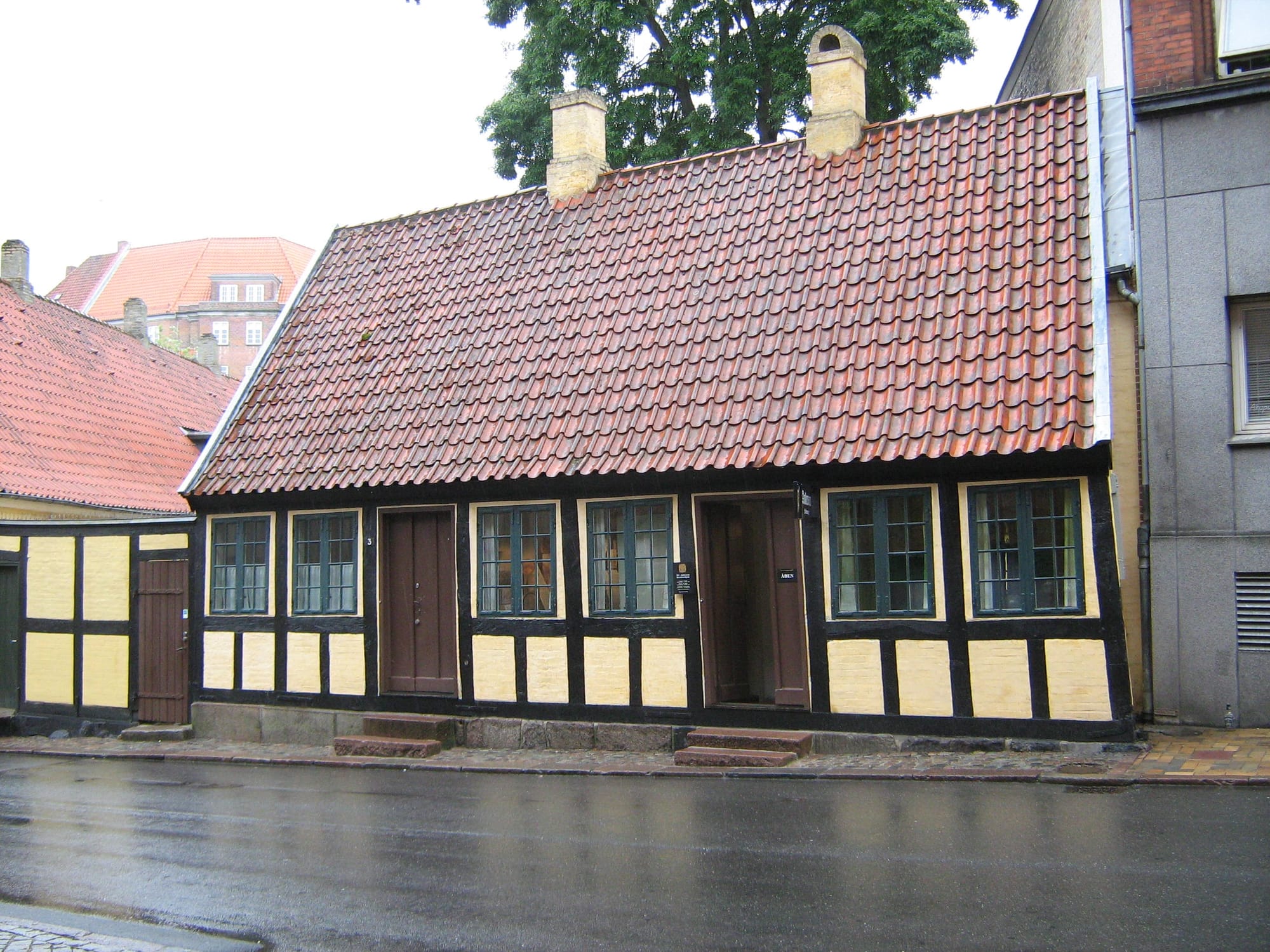
H.C. Andersen's childhood home in Odense (2010). Image by Ipigott - Own work, Public Domain, Wikimedia Commons
By that time, Hans Christian had already lost his father and started his practice (known as apprenticeship) in making and altering clothes to make some money. He had already discovered he had nice voice and could sing well, he was curios about literature and theatre, but the reality he faced made him give up on those thoughts. It all changed with that one meeting which, following the legend, took place in Odense, Andersen’s hometown, when he was 14 as the oldest.
The woman was a gypsy and had fortune-telling either as a hobby or as a way to earn her living. On meeting the boy in his early teenage years, the only thing she said was,
Odense will honour you with lights. You will be world-known.
The episode encouraged Andersen to move to Copenhagen and try to find himself as an actor.
The plan worked only partly. The boy was accepted to the Royal Danish Theatre due to the charming voice he had at the time. Ah, but nobody can escape physiology. The voice changed very soon and Andersen would make no further interest as a singer.
The trip as such wasn’t in vain, though. The director of the Theatre had appreciated Andersen’s writing style, got the King to help the youngster with a grant, and sent Andersen for schooling to the cities of Slagelse and Elsinore (Helsingør), Zealand[=EX1].
The 17-year-old was not particularly happy about the gift. Moreover, he was bullied because of his age and appearance. But schooling, of course, would bring his experience and skills to the next level and even allow to enter the University of Copenhagen.
Imagination
The whole world is a series of miracles, but we're so used to them we call them ordinary things.
H.C. Andersen
Andersen’s ability to visualise and describe scenes from imaginary worlds arouse, perhaps, from the times when his father would read him The Arabian Nights fairy tales. These were the stories from far-away countries where characters with unusual names like Scheherazade and Shahryār , jinn and other magicians were telling about sea explorations, mermaids, searches for an ancient lost city and traveling different worlds where there were no meadow fields or roses but where one could meet talking snakes and use a magic lamp.
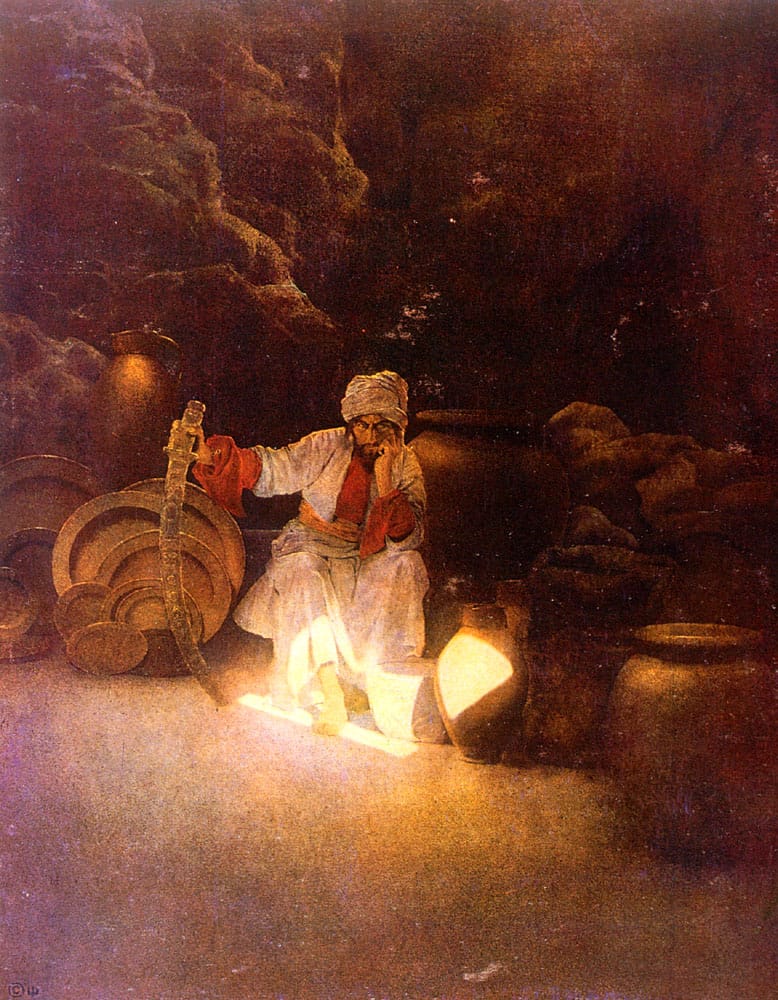
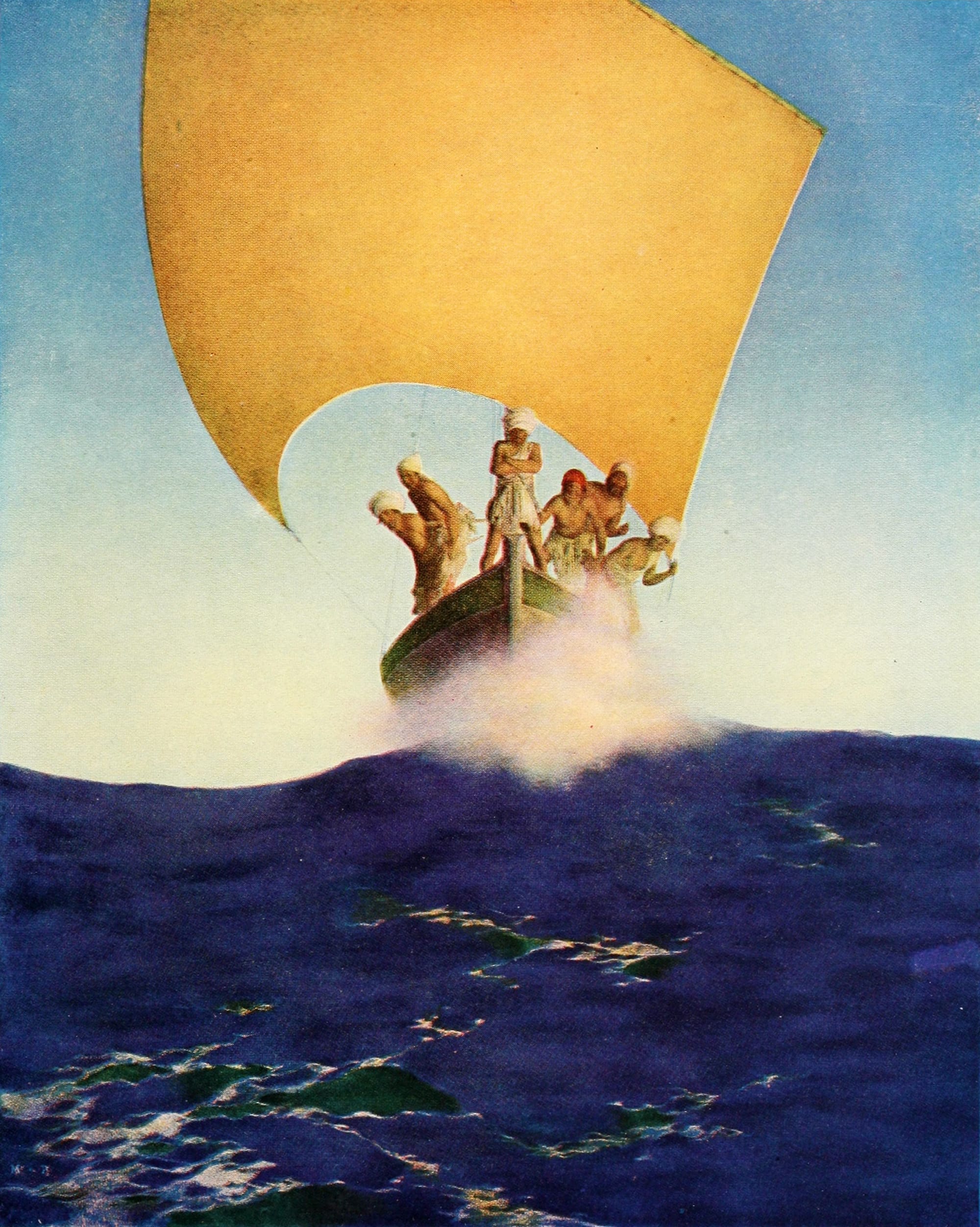
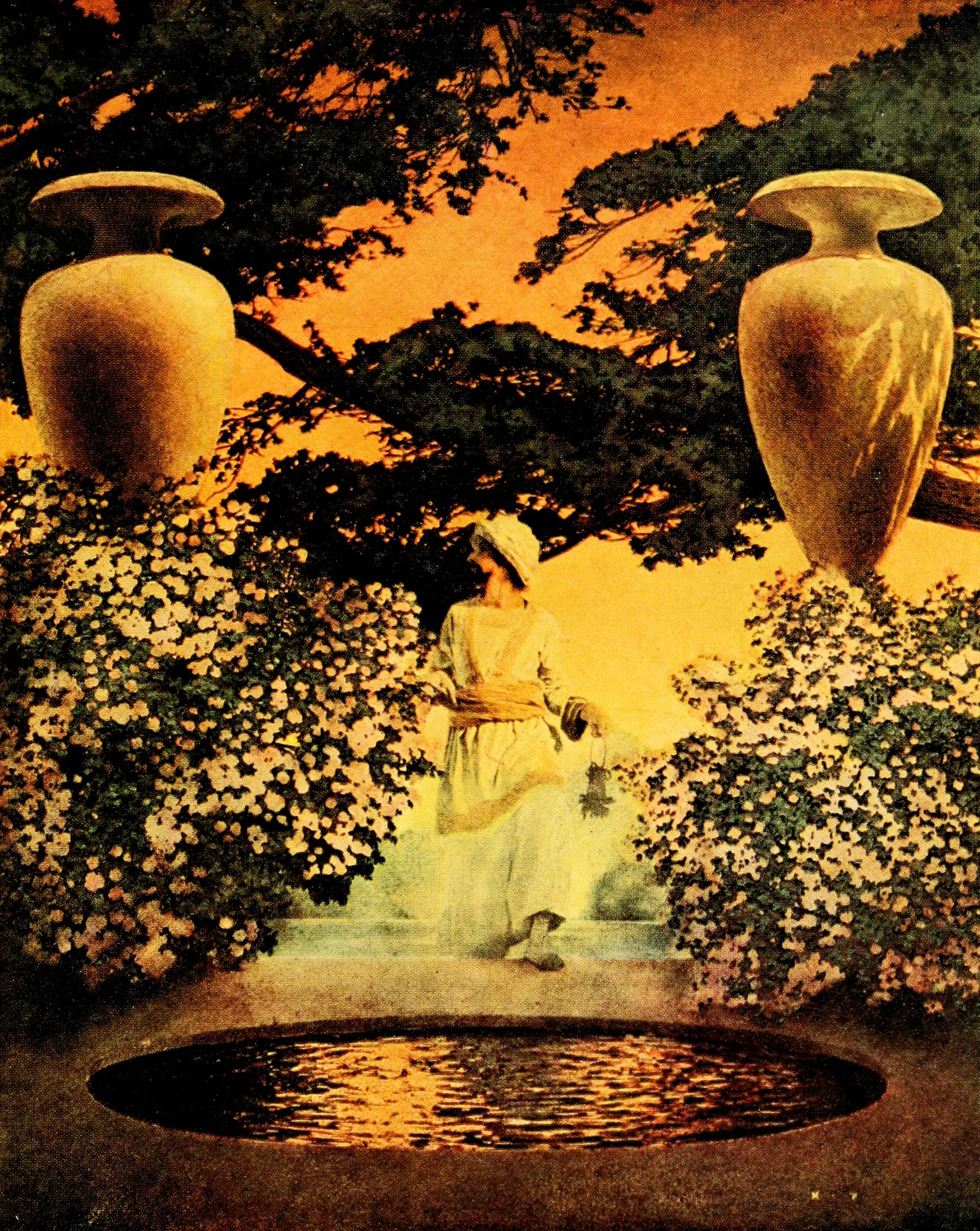
Illustrations to fairy tales from "The Arabian Nights" series. Images by Maxfield Parrish, Wikimedia Commons, Public Domain (from left to right): 1, 2, 3.
These were the worlds Andersen-the-kid was ready to travel again and again. Later, old legends and myths, sagas and folktales would bring him similar emotions and inspiration.
When switched from performing to writing, Andersen-the-author started with transforming the stories he knew. Soon enough, he came to his own characters, plots and scenes, and put them all into poems, travel sketches, novels, and plays. But it was his literary fairy tales which society (well, first of all, its youngest members) admired the most.
Feelings
Aside from paying special attention to details, Andersen prioritised feelings above knowledge one could draw from a fairy tale. It was so important to him to let a little reader recognise themselves in a fairy tale!
Look, just like you, Gerda plays with a neighbour, Ugly Duckling goes through changes, Little Mermaid feels lost, kings sometimes appear too strict or just funny. Look, both adults and children fall in love, feel brave or scared, lose and gain something. Look, there are flowers and trees, birds and animals which have their own world that is so similar to ours. And there is something we can learn from them all!
It is amazing how poetically Andersen described routine to encourage sympathy from readers. Meanwhile, he did not forget about elements of education in his tales for children – but he intertwined these into texts as part of a plot rather than a rule to remember. This way, he believed (and was probably right) kids would not really notice lessons but would still be taught about what it means to be a friend or a parent, to be young or old, rich, poor, kind, or wicked.
In the 19th century, when Andersen lived, critics were not enthusiastic about the approach, but time has proved it making sense: H.C. Andersen’s fairy tales are still among children’s favourites.
"It is only with the heart that one can see clearly, for the most essential things are invisible to the eye."
(from The Ugly Duckling)
Personal experience
All the most famous fairy tales by H.C. Andersen appeared after he had travelled around Europe.
Andersen’s first long trip took place when he wrote a set of poems about Denmark and received a travel grant from the King of Denmark. He was 28 and was just forming as a writer, so after travelling Italy from Milan and Venice to Naples and Sorrento, and spending time in Germany and France on the way, Andersen wrote an autobiographical novel about the journey. The Improvisatore , that very novel, established him as a promising contemporary writer.
"Whoever has been in Rome is well acquainted with the Piazza Barberina, in the great square, with the beautiful fountain, where the Tritons empty the spouting conchshell, from which the water springs upwards many feet."
(from The Improvisatore)
"The immense desert which lies around old Rome was now my home. […] The burnt-up grass, the unhealthy summer air, which always brings to the dwellers of the Campagna fevers and malignant sickness, were doubtless the shadow side of his passing observations."
(from The Improvisatore)
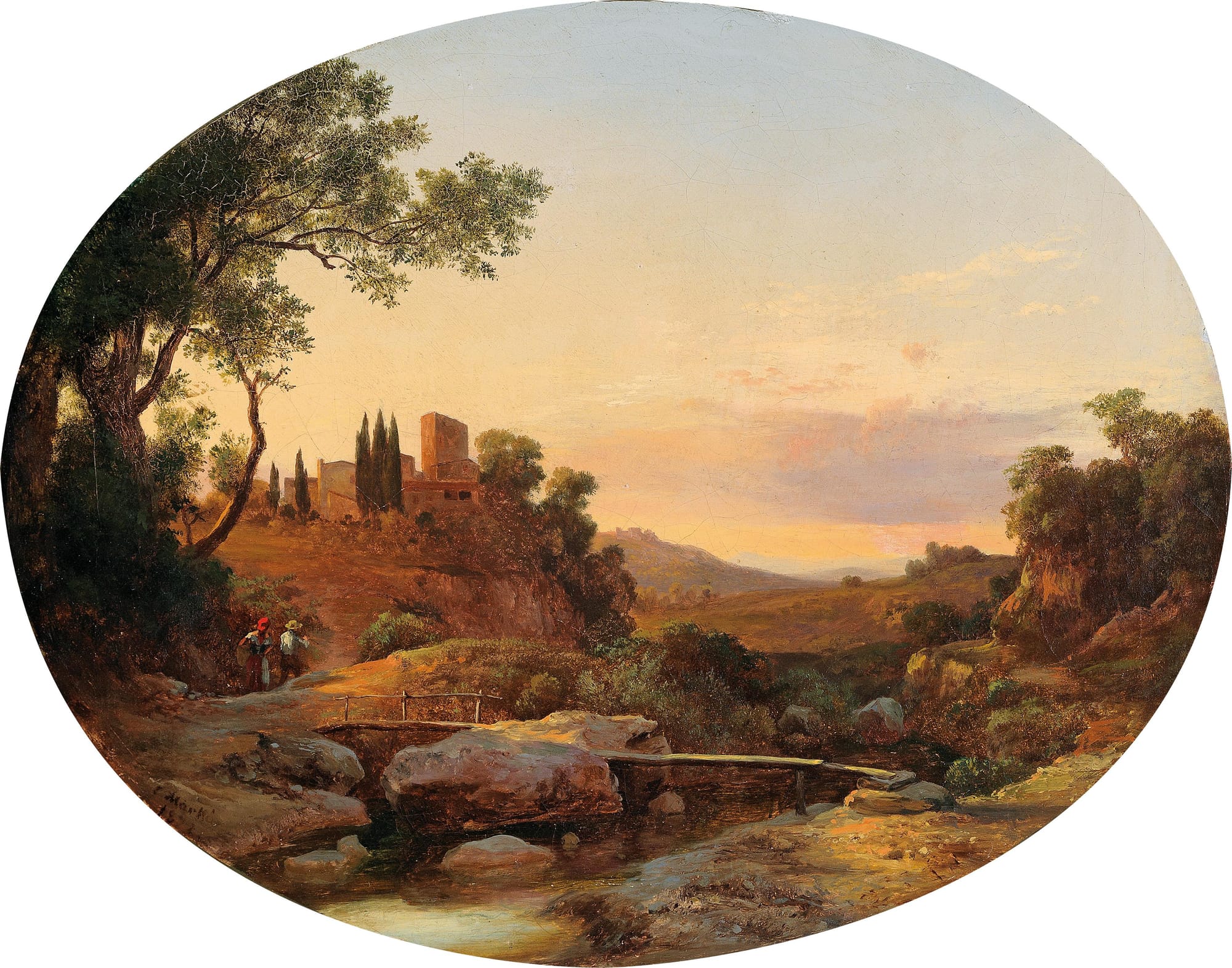
Evening over Campagna (1872). Painting by Károly Markó the Younger, Public Domain, Wikimedia Commons
A Scandinavian, H.C. Andersen knew a lot about everyday life and traditions in Denmark, Sweden, Norway and Finland, and would gladly take a ride around any of these countries when there’s a chance.
"In these northern regions, a beech-wood often buds in a single night and appears in the morning sunlight in its full glory of its youthful green."
(from Anne Lisbeth)
"Lights were shining from every window, and there was a savoury smell of roast goose, for it was New-year’s eve…"
(from The Little Match-Seller)

H.C. Andersen almost never set his plots in specific cities but he certainly used the scenery he had once seen to describe the surroundings as part of a story.
"In a large town, full of houses and people, there is not room for everybody to have even a little garden, therefore they are obliged to be satisfied with a few flowers in flower-pots. […] and the rose-bushes shot forth long branches, which were trained round the windows and clustered together almost like a triumphal arch of leaves and flowers. The boxes were very high, and the children knew they must not climb upon them, without permission, but they were often, however, allowed to step out together and sit upon their little stools under the rose-bushes, or play quietly."
(from The Snow Queen)
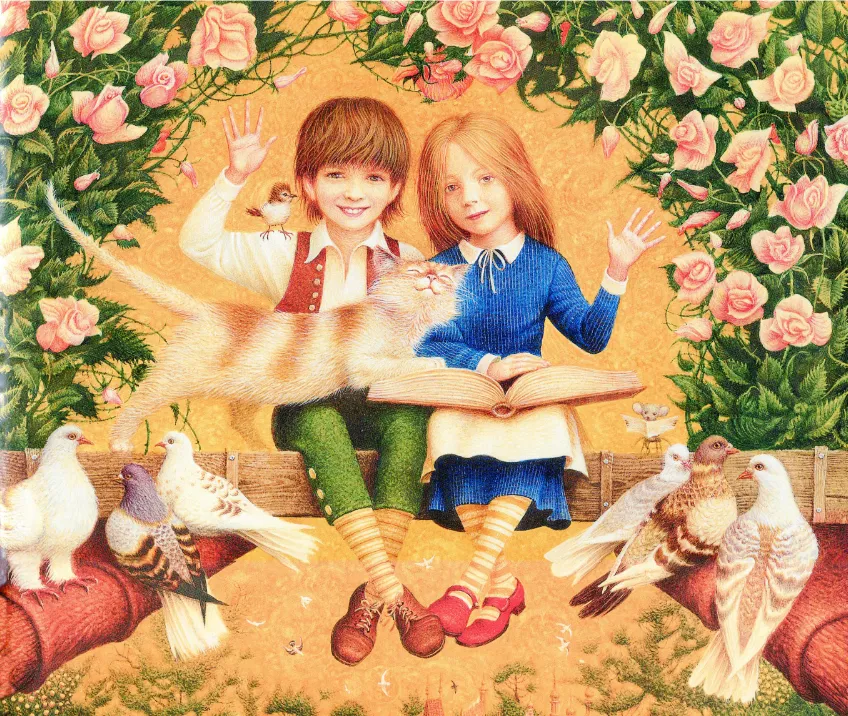
"The Snow Queen" illustration by Vladyslav Yerko. ©Image by A-BA-BA-HA-LA-MA-HA Publishers.
"Oh, you poor things," said the Lapland woman, "you have a long way to go yet. You must travel more than a hundred miles farther, to Finland. The Snow Queen lives there now, and she burns Bengal lights every evening. I will write a few words on a dried stock-fish, for I have no paper, and you can take it from me to the Finland woman who lives there; she can give you better information than I can."
(from The Snow Queen)

"The Snow Queen" illustration by Vladyslav Yerko. ©Image by A-BA-BA-HA-LA-MA-HA Publishers.
He visited Spain, Gibraltar and Morocco for the first time when he was 57. Nevertheless, due to the previous trips and broad knowledge, two years before that, H.C. Andersen managed to describe the region in realistic details and so vividly that one can easily imagine themselves there, far away in the South:
"This story is from the sand-dunes or sand-hills of Jutland, but it does not begin there in the North, but far away in the South, in Spain.[…] It is warm and beautiful there; the fiery pomegranate flowers peep from among dark laurels; a cool refreshing breeze from the mountains blows over the orange gardens, over the Moorish halls with their golden cupolas and coloured walls. Children go through the streets in procession with candles and waving banners, and the sky, lofty and clear with its glittering stars, rises above them. Sounds of singing and castanets can be heard, and youths and maidens dance upon the flowering acacia trees, while even the beggar sits upon a block of marble, refreshing himself with a juicy melon, and dreamily enjoying life."
(from A Story from the Sand-Hills)
H.C. Andersen did not make it a secret he enjoyed travelling while also using trips to meet people. Thus, on the way to Italy the 28-year-old Andersen met Heinrich Heine and Victor Hugo in Paris; in four years he went to Sweden to meet Frederika Bremer , a writer and the creator of the first female tertiary school in Sweden; in 1841, on the way home from Greece, Andersen met Felix Mendelssohn in Leipzig, and the same year he had a meeting with Ferenz Listz in Copenhagen. He would also meet Charles Dickens, Bjørnstjerne Bjørnson, Johannes Brahms, Henrik Ibsen.
All but for Heine, Hugo, and Bremer were somewhat younger than Andersen and had it as an honour to talk to the master who had already been a guest to several royal families, while Andersen was genuinely curious about other people, their works, and countries he had not yet been to.
One day, he would find himself pretty surprised when looking back to where it all had started,
Twenty-five years ago… I arrived with my small parcel in Copenhagen, a poor stranger of a boy, and today I have drunk chocolate with the Queen, sitting opposite her and the King at the table.
Life itself is the most wonderful fairy tale.
Enjoy life. There's plenty of time to be dead.
H.C. Andersen
More about H.C. Andersen’s lifetime:
Life – a chronological list of events, trips, meetings, and publications by H.C. Andersen, based on the works by Sven H. Rossel
Works – the most complete digital collection of fairy tales, poems, autobiographies by H.C. Andersen created by experts from the Hans Christian Andersen Center at the University of Southern Denmark (available in English and Danish)
[=EX1] the same Danish island where Copenhagen is situated; not to be confused with Zeeland, the province in the Netherlands or New Zealand, an island country in the Pacific Ocean