
What were the milestones for William Colgate, a freshly built businessman in New York?
This is a story of how what seems to be a dead end can once become a promising start. This is a story about bravery, honesty, and dedication which are awarded with recognition and remembrance, including, among other things, a university named after the family name. This is a story which started more than 200 years ago and is still ongoing!
Below we share William Colgate’s approaches to business management which were forming from the day of his arrival to the United States till him becoming one of the leading manufacturers in the country. Hopefully, they would help to make today’s business (and not only!) communities even better.
Encouragement
The Colgates left their cherished home with tears and in a hurry. They would never do it if not for William’s father who could be arrested at any time for his political views. The escape journey took about two months and in May 1795 the family found themselves 40 minutes away from the centre of Baltimore in the USA. William was 12 at the moment.
William’s father used to be a farmer in England. Here he tried to merge his efforts with a local to start a soap&candles business. William knew nothing about business management, neither had he an idea about soap manufacturing. But then a schoolboy, he was ready to help. The process was so captivating that when the business failed, William decided to re-establish it on his own.
It didn’t live long due to the lack of financing. Little would inspire William to go into business again, despite he liked the process of soap manufacturing. The encouragement came from a random dialogue with a boat captain whose idea was simple yet powerful,
Someone will be the leading soap maker in New York. It may be you!
Finding a way to learn
William was 21 when he left the farm near Baltimore for New York. On the southern end of Broadway, he found the largest candles manufacturer and asked for a position in the company. They had no vacancies but offered the young man to join as a clerk assistant. William refused.
I desire, sir, to learn the business. Any one can assist a clerk, but I wish to know how to work.
The owner of the company decided to make William part of the enterprise. In three years, William grew from a manufacturer with one of the lowest salaries to the company’s principal business manager.
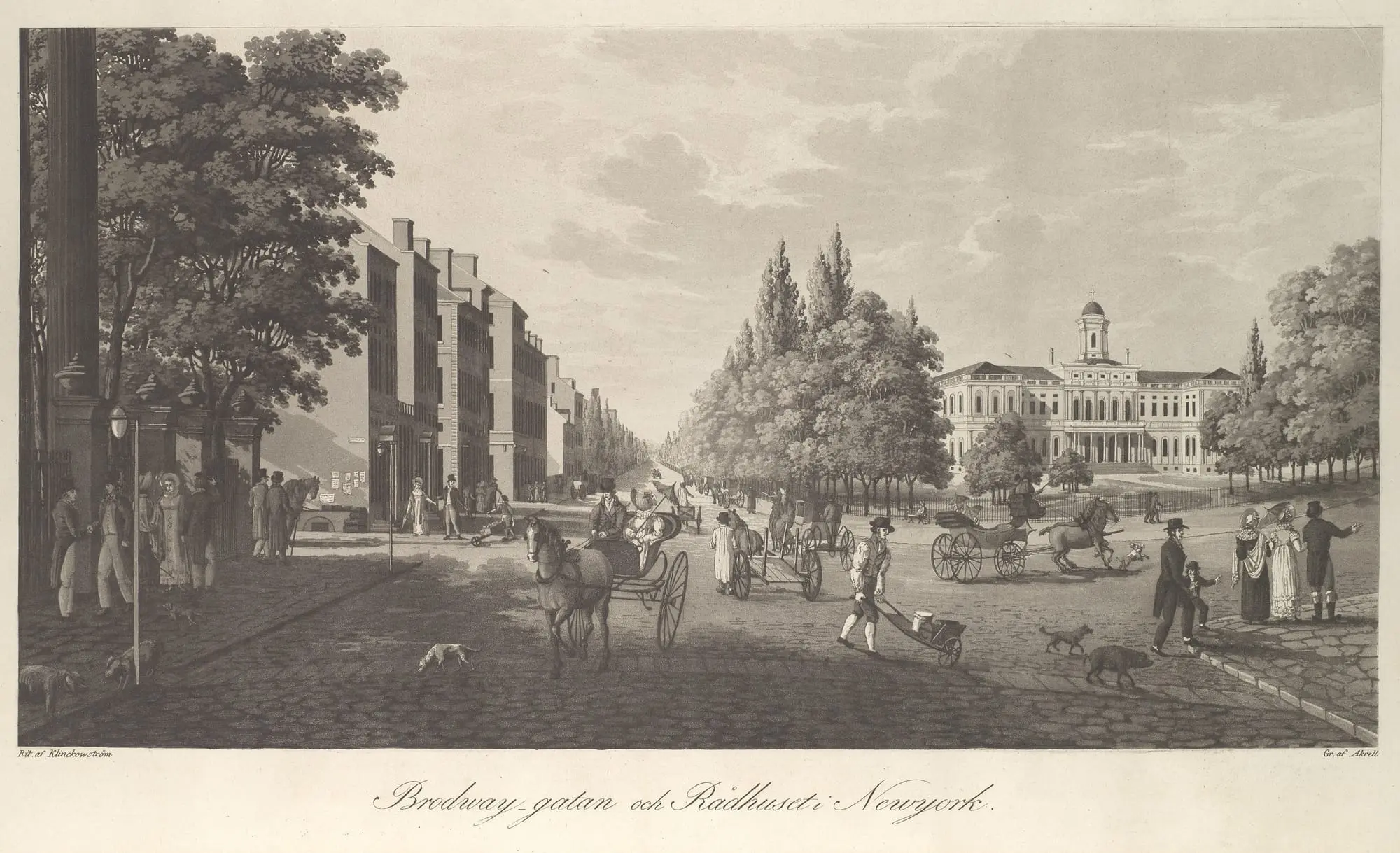
Broadway and City Hall in New York. Image by Axel Klinckowström / Carl Fredrik Akrell, Wikimedia Commons
Meeting the first customer
William was 24 and it was time to become a real businessman. He found a location on one of the shortest streets of Manhattan, five minutes away from where the cornerstone of the nowadays’ City Hall had already been laid. He applied all his experience to offer the best quality he could. He was spending early morning and late evening hours in the store to make the place accessible, welcoming and handy for future customers. He was a manufacturer, a seller, an account manager, a porter, and he never disregarded any remarks from the visitors. He finally opened his soap&candles store in New York and was passionately waiting for the first customer.
It was a handsome gentleman who occasionally appeared in the district. He chose a soap bar and was ready to take it with him, though the seller insisted on making the delivery. Colgate had to close the store one hour earlier to manage the delivery to another end of the city, he would spend double profit from this sale, but he did it. And he earned a good, long-time customer already from the first sale.
Fixing errors with dignity
William Colgate avoided legal disputes at all means. He was sure that lawsuits can only spoil credit, friendship, and reputation, and never contribute to either one. He talked to friends, shared his ideas, and aimed to prevent any possible conflicts. Even if he required a lawyer’s assistance for that, the task was to solve the problem way before any of the sides was ready to send it to a court.
He was interested in qualitative feedback which, naturally, was not always positive, but the task was to confirm or refute his beliefs rather than get glowing reviews only. He would probably not share the ideas with a random visitor while as for his trusted friends, William’s position was as follows:
If my judgement is right, my friend will confirm it; if I have erred in consequence of overlooking any element in the case, he may point out to me my error.
Sharing is caring
By Mr Colgate’s thirties, his enterprise had become worth more than $5000 (approximately $100 000 today) and was constantly growing. In a few years, he would additionally start working with starch and become the largest starch manufacture in the USA.
Up till those days he remembered the words of the friendhe had been speaking to while on the boat many years ago. But he also remembered the promise he had given when leaving his family. William was deeply religious and the promise was inspired by the Bible:
"Then Jacob made a vow: If God will be with me and protect me in the journey I am making and give me food and clothing, and if I return safely to my father’s home, then the Lord will be my God… and of all that you give me I will give you a tenth."
William started by donating a tenth from his income for church and education. While prospering, he made it 20, 30, 50 and even 80 per cent. Colgate had a reputation of a trusted manufacturer and a careful employer, and was offered a nomination for the city mayor, which he declined in favour of the business and church duties.
Start it right, and you’ll get along well,
were also the boat captain's words during that conversation with William. William, in his turn, not only did well at the start but arranged the whole business in line with the Christian laws.

Modern-day Manhattan, New York City
When William Colgate passed away at the age of 74, one of his six sons took the company. It would be 15 years later when they launched production of (now world-known) toothpaste for the first time. The company can still be found on Manhattan, currently under a double name Colgate-Palmolive reflecting the joint efforts of once separate enterprises.