One of the most successful women , a TV host, a producer and actress of African-American origin stated that for all major moves in her life she had trusted her instincts (and the times she didn’t, she made mistakes).
A well-known German scientist in his 50s claimed that he usually got insights from intuition rather than from logic, so he would often believe that he was right but would not know it.
According to his colleagues and servants, a Prime Minister of the United Kingdom saved their lives when due to his intuition he ordered everyone to immediately leave the room.
The people behind these stories are Oprah Winfrey, Albert Einstein and Winston Churchill respectively, and it might look like they owed their success to their gut feeling. But how come intuition appears wrong when common people try to pick a lucky lottery ticket or choose a bank for investment? Or is there an error just when it comes to money?
A secret behind the stories of famous people
Oprah Winfrey’s full quote can be easily found on her personal website: "For all the major moves in my life – to Baltimore, to Chicago, to own my show, and to end it – I've trusted my instincts. I take in all the information I can gather. I listen to proposals, ideas, and advice. Then I go with my gut, what my heart feels most strongly."
- Gathering information first, gut feelings next.
Albert Einstein had already presented his theory of relativity, received the Nobel Prize in Physics and experienced a whole range of life events by his 50s. Also, he was a musician, so no wonder he greatly valued imagination and would often think in images, feelings, architectures. The scientist needed first to grasp the core of an idea and only after that he would be able to follow logic and formulate it in words (that's how we usually express our thoughts). Hence, the process was still closer to an educated guess than to a supernatural feeling out of nowhere.
- Intuition can be a wonderful starting point, hardly the main scientific argument.
Winston Churchill took the action after they all had heard an air-raid warning and another bomb landing somewhere nearby. The chances for the building at 10 Downing Street in London, the Prime Minister’s official residence, to be an intentional target or to become a random victim were high, so to evacuate everyone was a very reasonable decision based on knowledge, logic, and safety rules.
- From a certain perspective, intuition might look like pure magic but it is likely not magical at all.
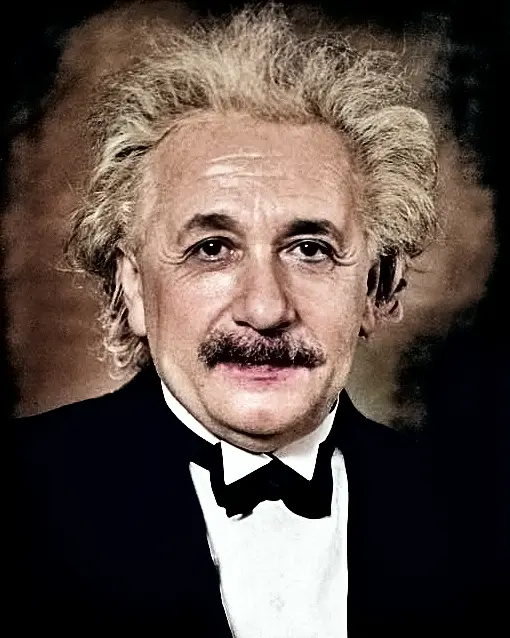
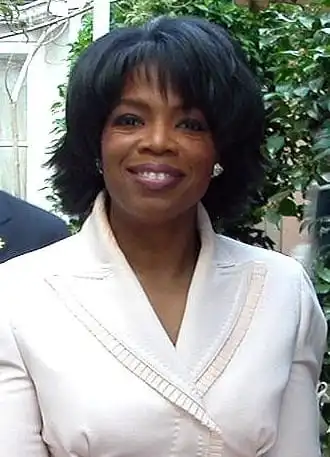
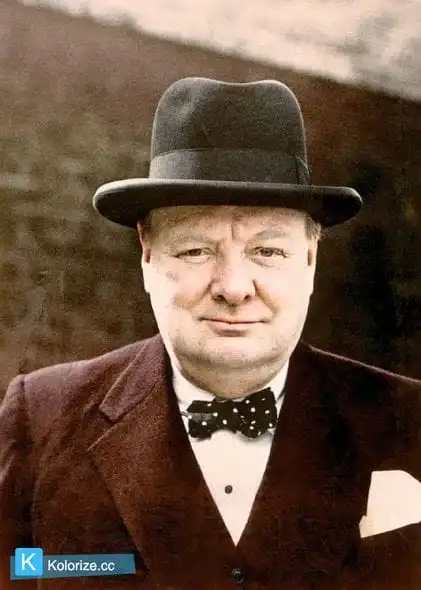
From left to right: 1 - Albert Einstein, photo by Sophie Delar, colorised, Wikimedia Commons; 2 - Oprah Winfrey, ©photo by Alan Light, CC BY 2.0, Wikimedia Commons; 3 - Winston Churchill, photo by British Government, colorised, Wikimedia Commons
Trust your feelings
- When it’s about health & safety
It does not happen often, but you might start feeling awkward about, for example, staying further at a party, going to a new place or choosing a road to drive. There are also cases when rapid change of plans turned out to be a huge shout-out from intuition to save its owner’s life or help somebody else. The same goes for some people insisting on making an extra check of their body – there might have been no clear reasons to suspect anything but the results would sometimes show otherwise.
In all such cases one’s health or life might depend on the (not) taken decision. In case we rely on bad feelings and nothing critical happens, everyone is happy and we can explain the worries by stress or tiredness. However, regrets can become unbearable when we know there were chances to avoid if not prevent something, but nothing was done.
- When it’s your field of expertise
An experienced real estate agent can sometimes say if a villa is worth the money literary at first glance, when no explanation is worded yet. The phenomenon has to do with the level of expertise as their brain has been practically trained to complete this task day after day. The same task is way more complicated for a common buyer because their intuition has no "basis" to whisper anything helpful right on the spot.
Thus, when you are a professional economist who works with stock investments, you probably can imagine how stable the market and banks are and make a good "intuitive" decision for your personal benefit. But if you just try to guess which type of companies will be the best to invest into, please remember that the guess may turn out wrong while the responsibility for a potential debt will still be yours.
- When you have all available information at hand
Nobody can be a true expert in every other field. But everybody can try their best at gathering relevant information. Official resources, specialised books, experts’ advice, even our friends’ thoughts – all these can give a surprisingly broad picture of what’s going on and, as a result, allow us to get up with a wonderful solution in mind.
Look for more arguments
- When you’re working on a scientific research
Scientific research must lead to objective and verifiable results. Thus, while intuition can initially lead you to a bright idea worth trying, it can never be a valid argument to support any of the study results.
Ground on previous studies by other scholars, check why your idea should or should not work theoretically, conduct an experiment and make reasonable conclusions to call it a scientific approach.
- When there is space for a bias
People can act subjectively without noticing it. Imagine you, for some reason, have toxic relations with people coming from a certain country or wearing a certain name. When this is the case, whatever professional expertise you have, there is always a chance for your instinctive decision to be biased towards those in the "questionable" area. It may have little to no effect in everyday life but can make a dramatic change when your task is, for example, to choose a right candidate for a position.
Having a list of the criteria you are mainly interested in would be a good idea for such cases.
- When the issue imposes risks for you or other people
Imagine all doctors and pharmacists strongly rely on their intuition when prescribing medications. What are the chances they will point to a truly helpful one? What if their intuition is too weak at the moment?
Whenever there is a risk for you or for other people to deal with serious consequences, especially when these are health-related, any intuitive idea must be supported by objective reasoning.
It may be fun to try and take a chance at guessing while it also might be more helpful to think ahead about what is going to happen if our luck is too sleepy this time.😉