They appeal to feelings, create associations, add to a brand’s "portrait," shape customers’ perception of a product, make understanding of colour psychology a must-have skill for marketers. Not to overlook the importance of colour, can you decode a message from the colours below?
There is no context to guide your guess and thus the task becomes almosthopeless. Now, if we ask you to think about the feelings these colours bring about or the brands they are associated with, you will instantly have suggestions at least for a few.
Were these colours once chosen for a reason? Sure.
Was it for marketing strategies? Often, but there are surprising exceptions.
Personal preference
The second-largest confectionery brand in the world and one of the British most successful companies, Cadbury was once part of a legal case which evolved around their trade mark colour. They have been using the specific purple for more than a century, and the court process took more than 20 years to be finally resolved.
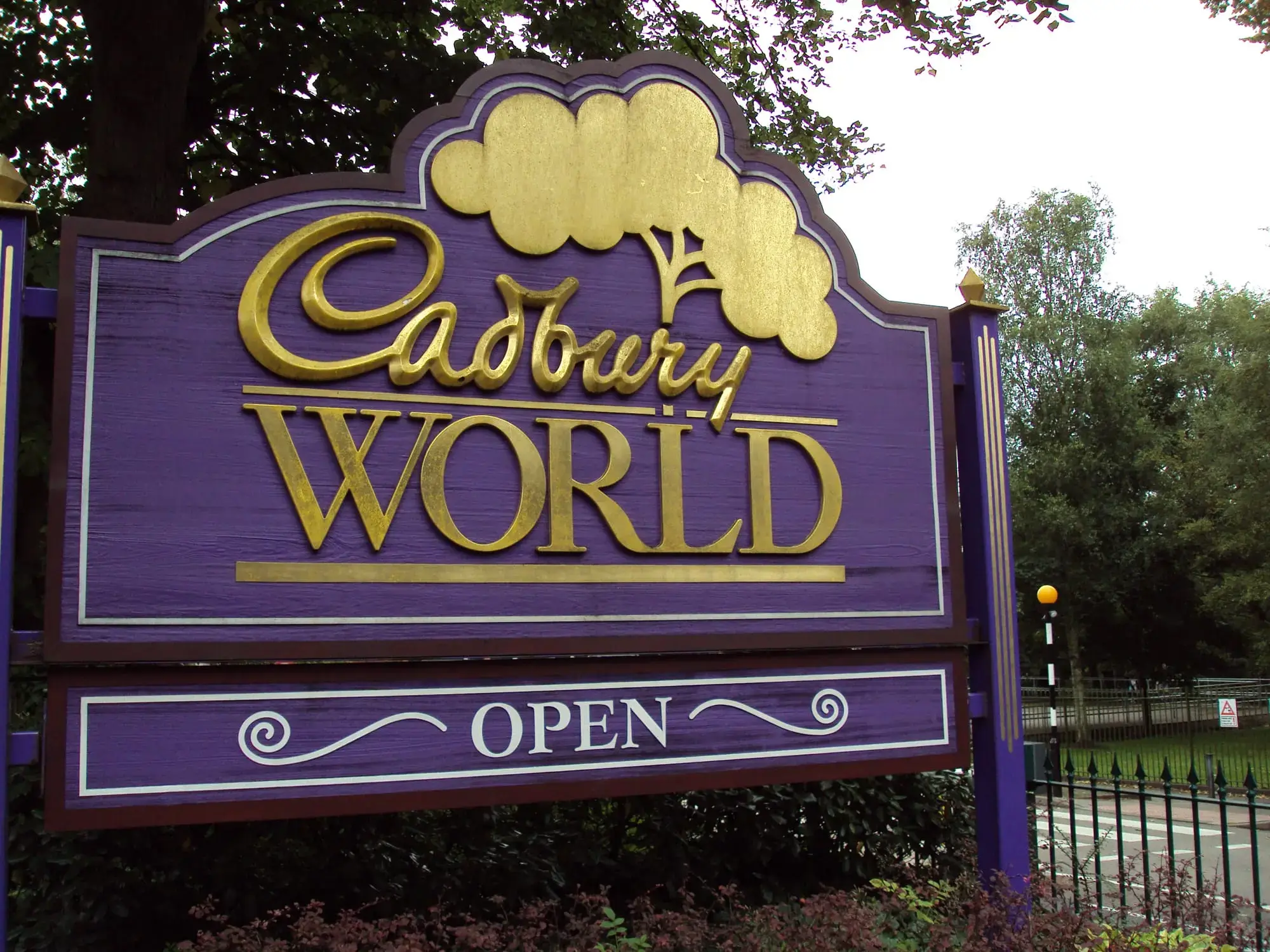
The signature logo as displayed at Cadbury World in Bournville, England. ©Image by Rept0n1x - Own work, CC BY-SA 3.0, Wikimedia Commons
About 200 years ago, in 1824, an entrepreneur started his business by selling tea, coffee, and drinking chocolate. In 18 years, they completely switched to chocolate products. In another five years, they made a partnership with his brother, and seven years later, in 1854, Cadbury Brothers became the official suppliers of chocolate and cocoa to Queen Victoria (the same Queen who invited F. Mendelssohn to play for her and who is said to have enjoyed Lewis Carroll’s Alice in Wonderland).
In 1905, four years after the Queen’s death, the company chose her favourite colour as their brand colour. After numerous sittings of the court, the specific tone of purple is now trademarked exclusively for the Cadbury ’s products.
Materials shortage
These were 1830s and horse racing was one of the most popular sports in Europe. In 1837, in Paris, Thierry Hermès started a workshop to serve European equestrians[=EX1] with horse equipment – similar to what L. Braille’s father had been doing some 30 years before. Hermès’s products were of very high quality and were meant for European noblemen.
When Thierry’s son took over the company about 45 years later, he made it internationally recognised. He was the first in France to use a zipper for leather goods.
When Thierry’s grandsons headed the company, they introduced leather clothes and accessories to the assortment. The company grew to 80 craftsmen, started a store in the US, premiered their first collection of women bags, scarves and clothes in Paris, and became an inspiration for other businesses.
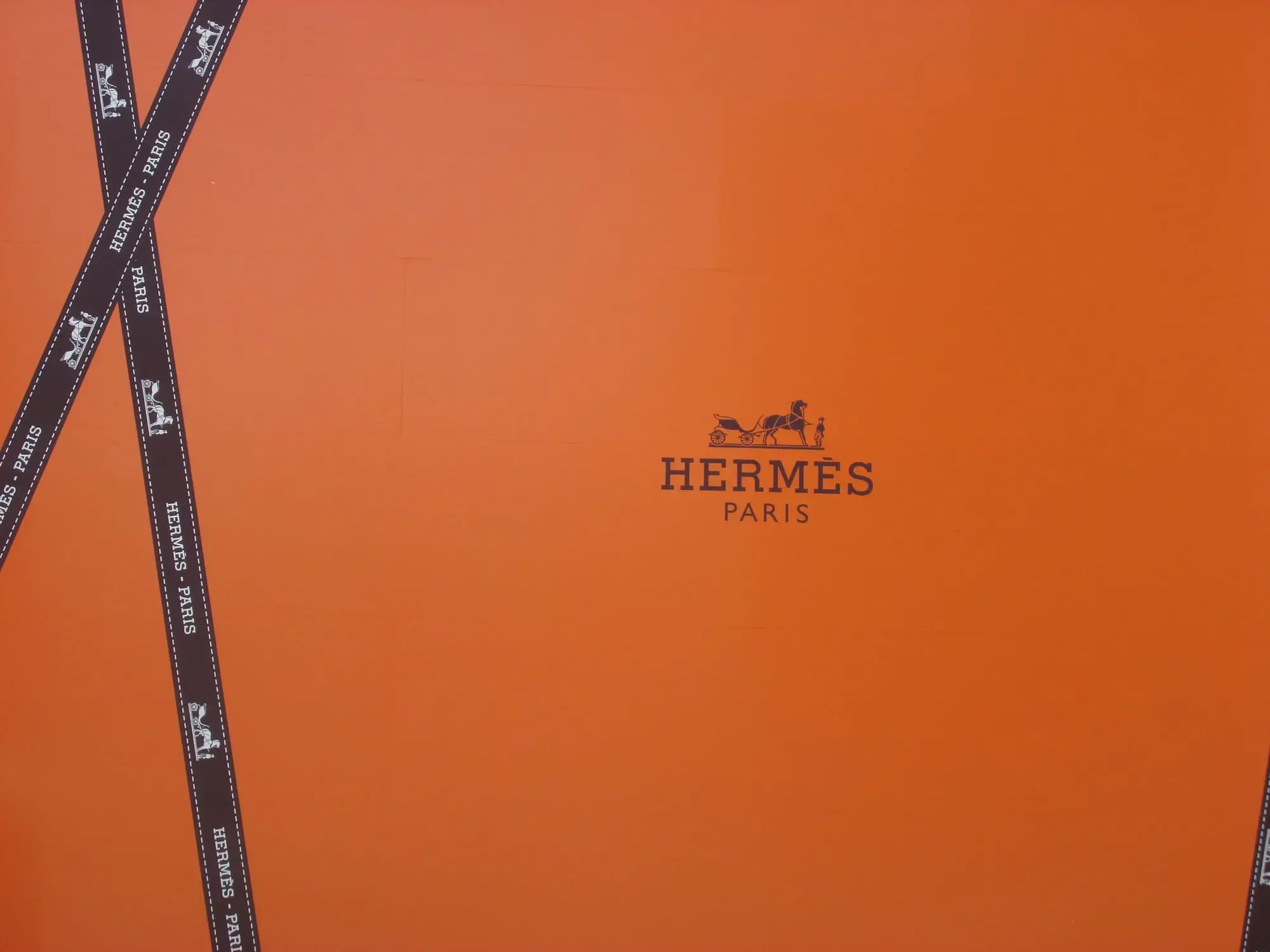
A Hermès box view. ©Image by Hiro - Kokoro☆PhotoMartin Abegglen, CC BY-SA 2.0, Wikimedia Commons
By that time, Hermès's normal colours had changed from cream to mustard yellow, from what resembled a pigskin they were working with to something brighter and a bit more fashionable. And then the World War II changed it all. Product shortages effected Hermès's cardboard supplier. The only colour they could offer was orange – perhaps, nobody was interested in this easy-to-notice juicy tone, or maybe it was just waiting for the right hands. Hermès accepted the option and has stuck with a slightly different variety of that orange till date.
An interesting fact: the Hermès orange has no equivalent in Pantone, while Pantone’s 1837 Blue is another trademarked colour, commonly known as "Tiffany Blue" and represents the year Tiffany & Co. was founded in New York. That was the very same Hermès was founed.
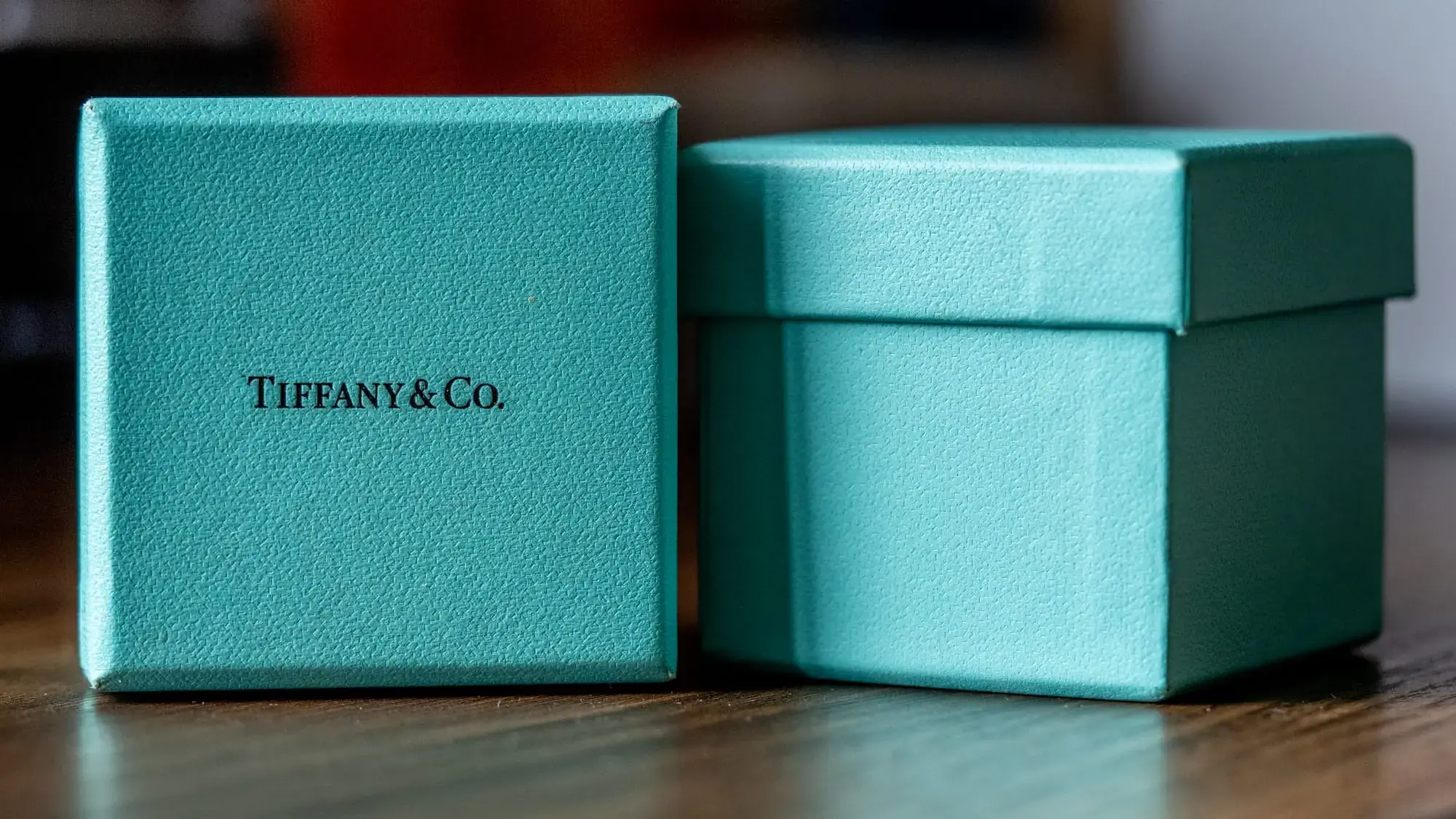
Tiffany & Co. boxes. ©Image by Ajay Suresh from New York, NY, USA - Tiffany & Co - Boxes, CC BY 2.0, Wikimedia Commons
Legal regulations
A former car test driver and racer was 41 when he founded his company to manufacture road cars. Ten years before that, its predecessor Scuderia Ferrari had been established. Today we know the company simply as Ferrari, an Italian first-class racing brand. The company does not have a tone of red as their official colour, neither it uses a selected single shadow of red used to paint the cars (there are more than ten possible hues for now), but red is still their signature.
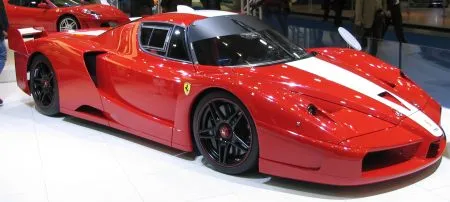
Ferrari FXX. Image from Wikimedia Commons, Public Domain
The reason for the choice of colour dates back to 1907 when the Peking to Paris race took place. The winner of the race was an Italian aristocrat Prince Scipione Borghese, accompanied by the noted journalist Luigi Barzini Sr. and the mechanic Ettore Guizzardi (who completed most driving). The Prince’s racing car was from an Italian manufacturer and was painted ...bright red.
In 1920s, it was already a legal requirement for all countries participating in the Gran Prix racing to have a national colour for racing and to get their cars painted accordingly. Italy’s choice was clear: they honoured their 1907 winner by adopting the colour of his car to represent the country further. Scuderia Ferrari was then coming to the market and to follow the established colour code, had their cars for international racing in Rosso corsa red.
National symbols
Ingvar Kamprad was 17 years old when he registered his first business. The best idea he came with for a name was to combine the first letters of his name (I for Ingvar + K for Kamprad), the place where he grew up (E for Elmtaryd) and his birthplace (A for Agunnaryd) into a short word – IKEA.
IKEA was selling office supplies like pens and photo frames, watches and wallets, and did not have a physical store at the time – all orders were made and shipped by mail. In five years, Ingvar added furniture to his catalogue. It was not self-assembled yet but produced by local manufactures and appreciated by customers.
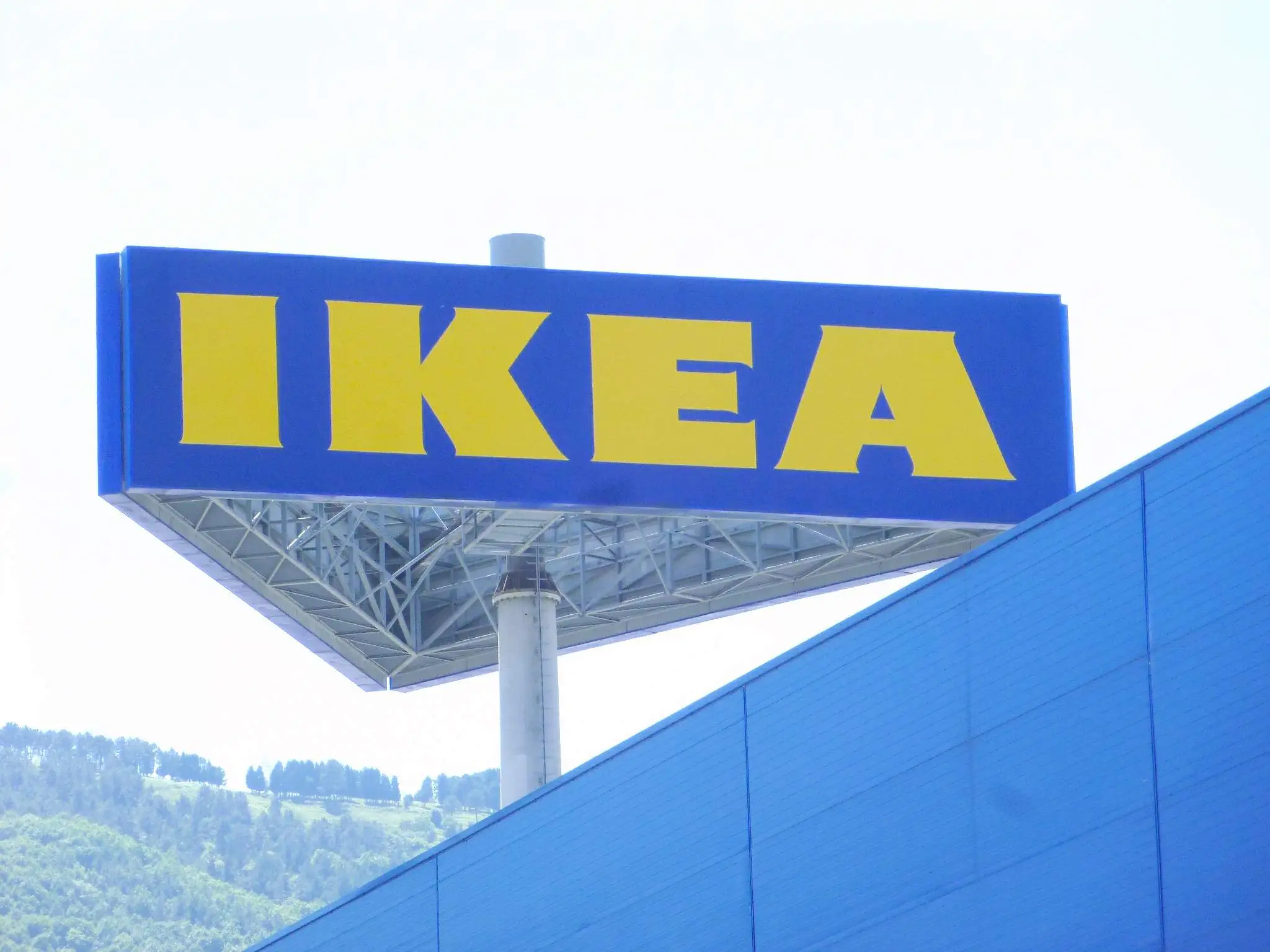
IKEA sign. Image by Zarateman - Own work, CC0, Wikimedia Commons
These were also the times when design tools for marketing were extremely narrow: one could only use fonts available at printing houses, and one would need to draw a logo by hand to be able to copy and paste it for further use. Thus, IKEA’s first logotype was black-and-white. Then brown. Then blue. Then even red, and starting from 1953 began to include Älmhult, the name of the place where Ingvar opened the first showroom.
By 1970s, all Scandinavian countries had at least one IKEA store, and in 1973 Switzerland became the first European country to get one. The brand was actively gaining popularity and it was time to fix the association with the country of its origin, Sweden. Hence, since then, the IKEA logo is always in blue and yellow to resemble the Swedish flag.
See the whole story of how the IKEA logo has been changing here.
[=EX1] horse riders