
What should you think about before doing some work mainly or exclusively for financial benefits?
Some three hundred something years ago, in 1714, the Parliament of Great Britain issued the Discovery of Longitude at Sea Act. While it sounds like a new law being introduced, the Act began a competition for scientists and engineers: the one to find a solution for how sailors at the sea could know precisely at which longitude they were would receive from £10 000 to £20 000, depending on accuracy of the method.
Today the win would be from £1 700 000 to £3 300 000 respectively, a good proof for a scientific problem to be highly important. The importance was real:
- Marine navigation was developing on a high pace and was strongly connected with trade and country’s position in international rankings.
- In October 1707, one of the greatest maritime disasters in British history took place because of poor navigation – four warships of the Royal Navy fleet sank after having collided with rocks near the Isles of Scilly. What led to this were poor weather conditions and lack of knowledge of how to calculate exact position of a ship.
- Both scientists and sailors knew how to measure latitude of a ship’s position in the sea, but about a year before, having any tools for precise calculations, Isaac Newton had claimed the problem of longitudes being unsolvable.
Below is the story of the winner who was never awarded the declared prize.
Do you like the job or are there other reasons for you to start it?
When the competition was open, John Harrison had already built his first tall-case clock. Similarly to how it worked with woodcutting, he learnt the basics of clockmaking by helping his father. John had been genuinely curious about clock mechanisms since his childhood, when parents gave him a tic-tac ticking tool as an entertaining toy for the time of the boy’s illness.
Curiosity kept him busy for many years. John even involved his younger brother into the process, and together they were working on several clock designs, including the most popular pendulum clocks (those with a swinging weight), tall-case, tower, and pocket watches.
Although a self-taught master, John achieved the accuracy of about one lost second per month – majority of other clocks would lose a few seconds per week.
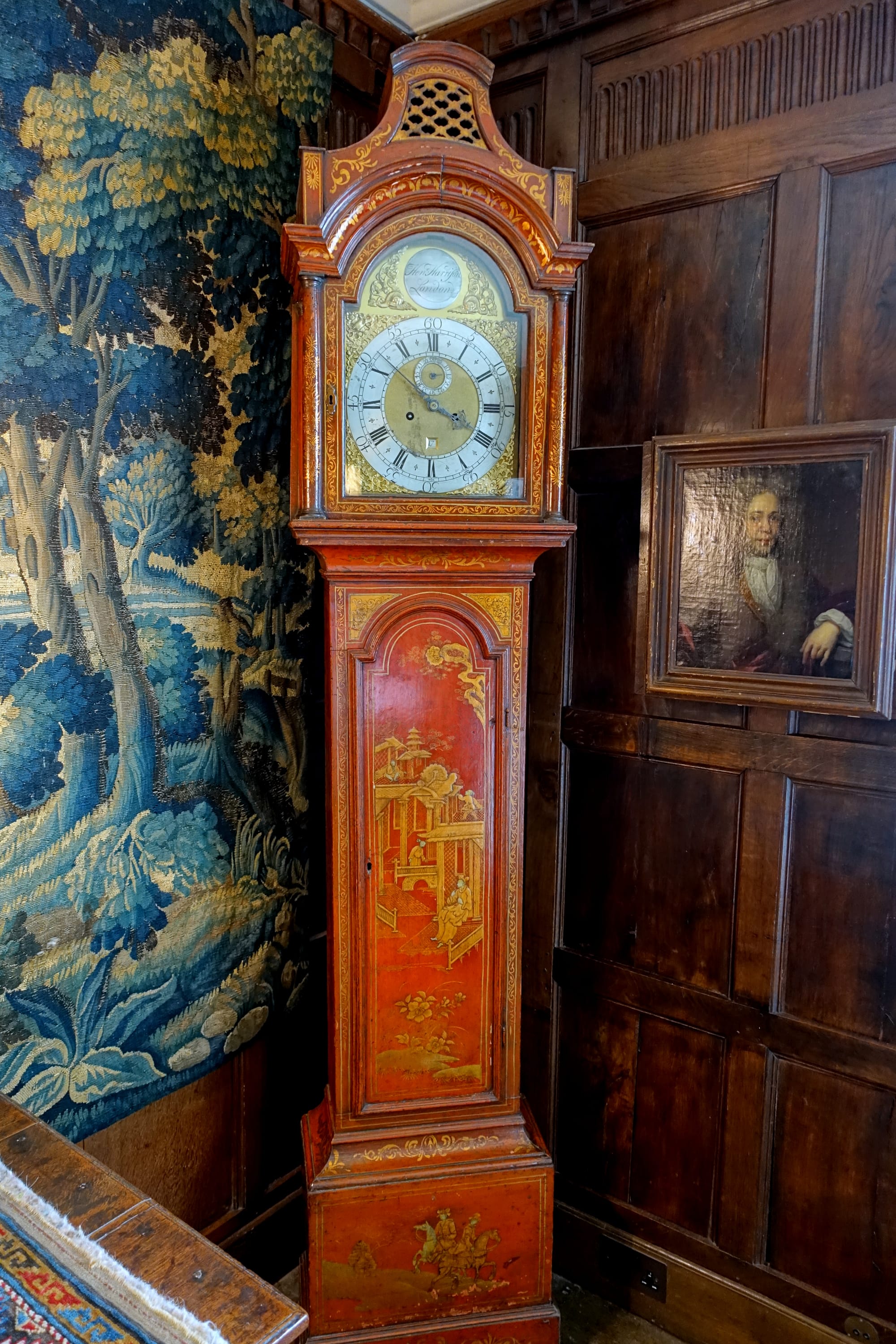
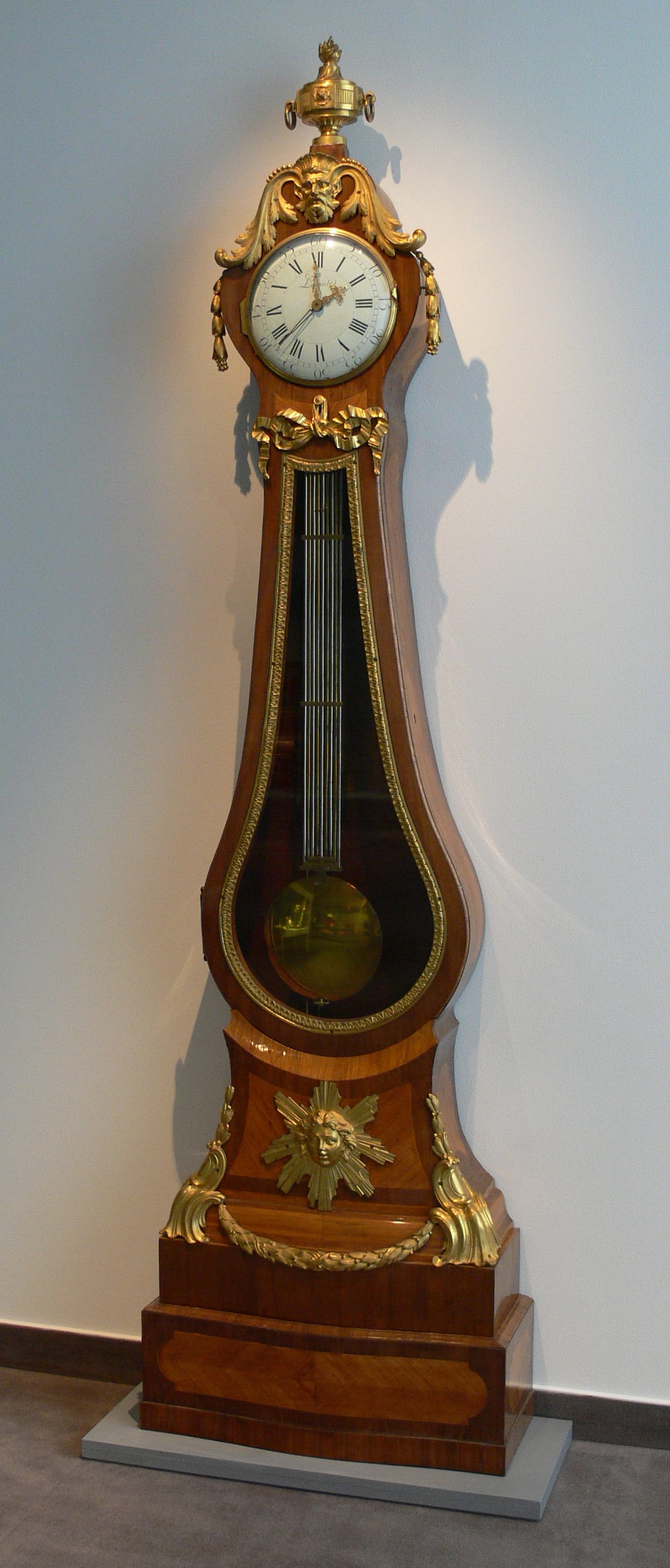
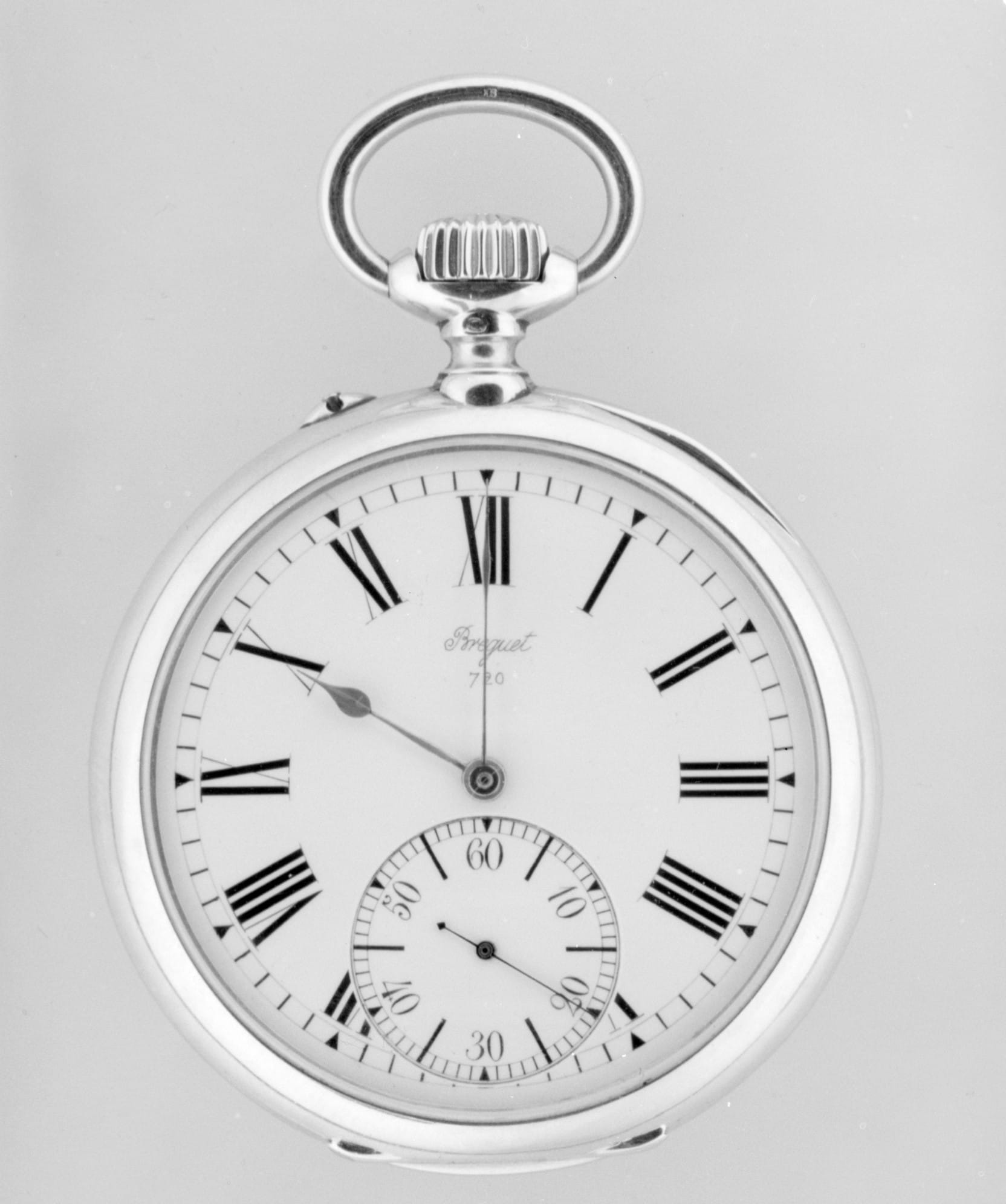
Examples of different types of clocks (from left to right): (1) a tall-case or a grandfather clock; (2) a pendulum clock; (3) a pocket watch. Images from Wikimedia Commons.


- So yes, John Harrison loved what he was doing and would not be annoyed doing it for money.
Would you financially depend on this job?
A skilful and then known master John Harrison, certainly, earned his living with clockmaking. It does not, however, contradict the desire to earn even more, get some fame within scientific circles, and finally, help thousands of people who were waiting for a solution.
By 1730s, it was absolutely clear that similarly to how geographical latitude can be calculated by position of the sun at its highest point, the moments of sunrise or sunset can be helpful in geographical longitude measurement. The difference is that for longitude one would also need to know exact time at some reference point. Thus, the only thing to do was to create a particularly accurate clock, given that clock mechanisms started to deviate as soon as there were changes in temperature, humidity, or stability – at the sea all three conditions would normally be broken.
The task perfectly suited John Harrison since he did not have to sacrifice his main job to try himself in the competition. Even more, the competition would add to the quality of his craft and, consequently, the number of orders.
In 1735, John Harrison who was then 42 years old was ready to demonstrate his first marine clock. He reached Edmond Halley (that very astronomer after whom the comet is named) who was part of the commission, and the astronomer put Harrison in contact with another clockmaker George Graham, who would then provide additional financial and moral support to John Harrison.
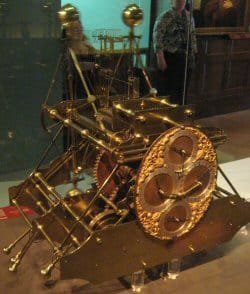
John Harrison's first marine clock (H1). ©Image by Phantom Photographer - Own work, CC BY-SA 3.0, Wikimedia Commons
- The competition which Harrison had great chances to win became a personal challenge and potentially a good bonus rather than just a way to make a living.
When and how are you going to receive the money?
The initial conditions for the award included the following:
- the solution or the tool must be tested in live circumstance, on a ship journey, likely from England to West Indies,
- the solution must be highly accurate (there were exact figures for an acceptable deviation),
- one can be awarded a smaller prize for a partial solution of the problem.
When John Harrison presented his invention to the commission, his marine clock became the first one they considered worth live testing. For better or worse, the scientists took a journey from England to Lisbon, Harrison’s method proved to work, but the clock, even though appeared reliable during the second half of the journey, was not functioning well in the beginning. The commission agreed on paying the inventor £500 in two transfers – a half in advance and a half after an improved device is ready. Harrison promised it to be ready in two years.
He almost finished the second version of the clock when he himself found a serious mistake and had to start a third one. For the third clock, Harrison changed the design but could not reach the desirable (and he knew, possible) level of accuracy, even though he spent almost 20(!) years more on it. Dedicated enough, he started the fourth clock, now practically a pocket version (for comparison, the very first one weighed 34 kg).
The fourth clock was again allowed to sail on ship board, this time from England to Jamaica. John Harrison was 68 at the moment. The clock was accompanied by John’s son. Harrison was the only racer in this competition who had been in it for decades, and his clock proved to be flawless.
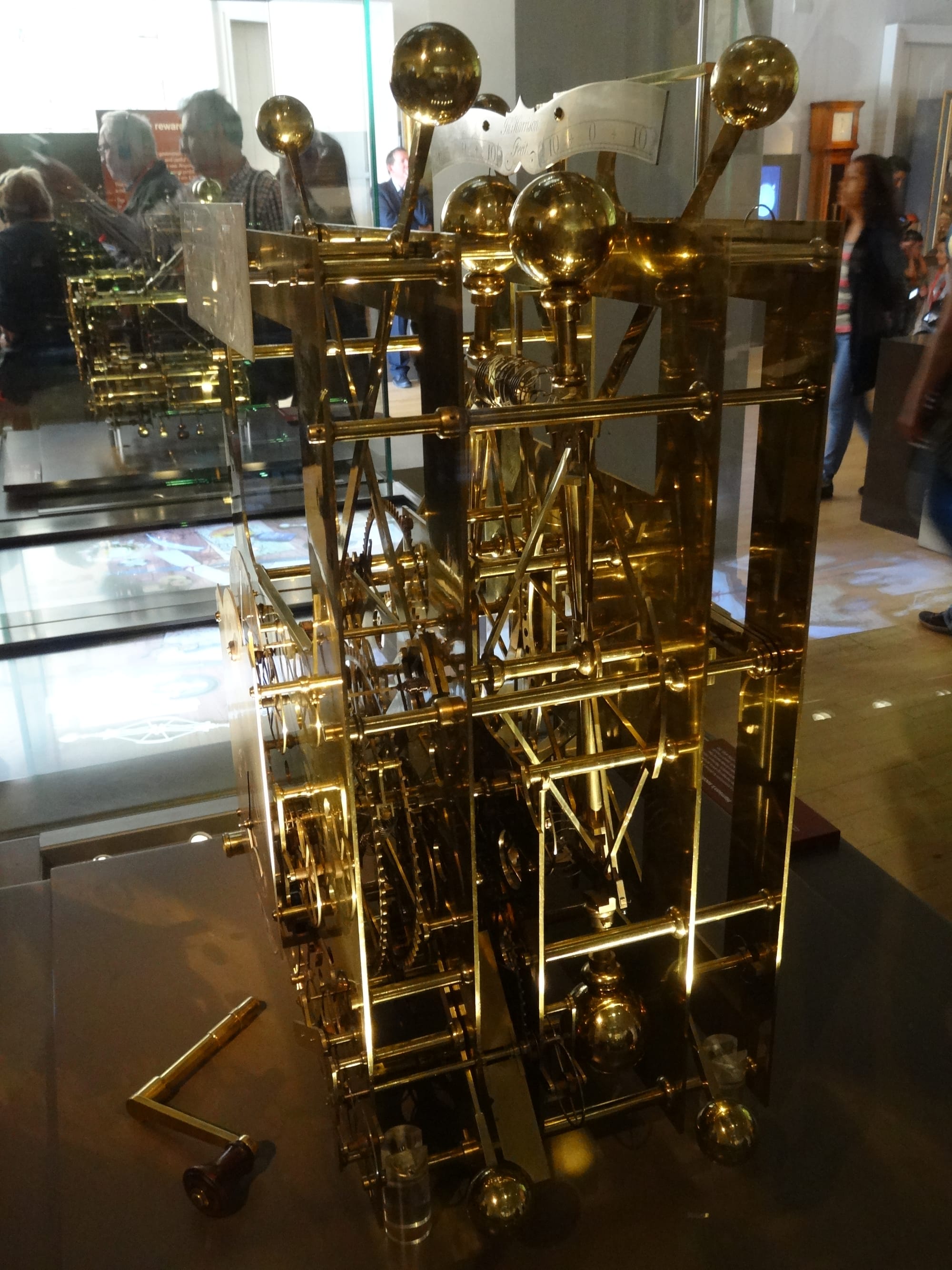
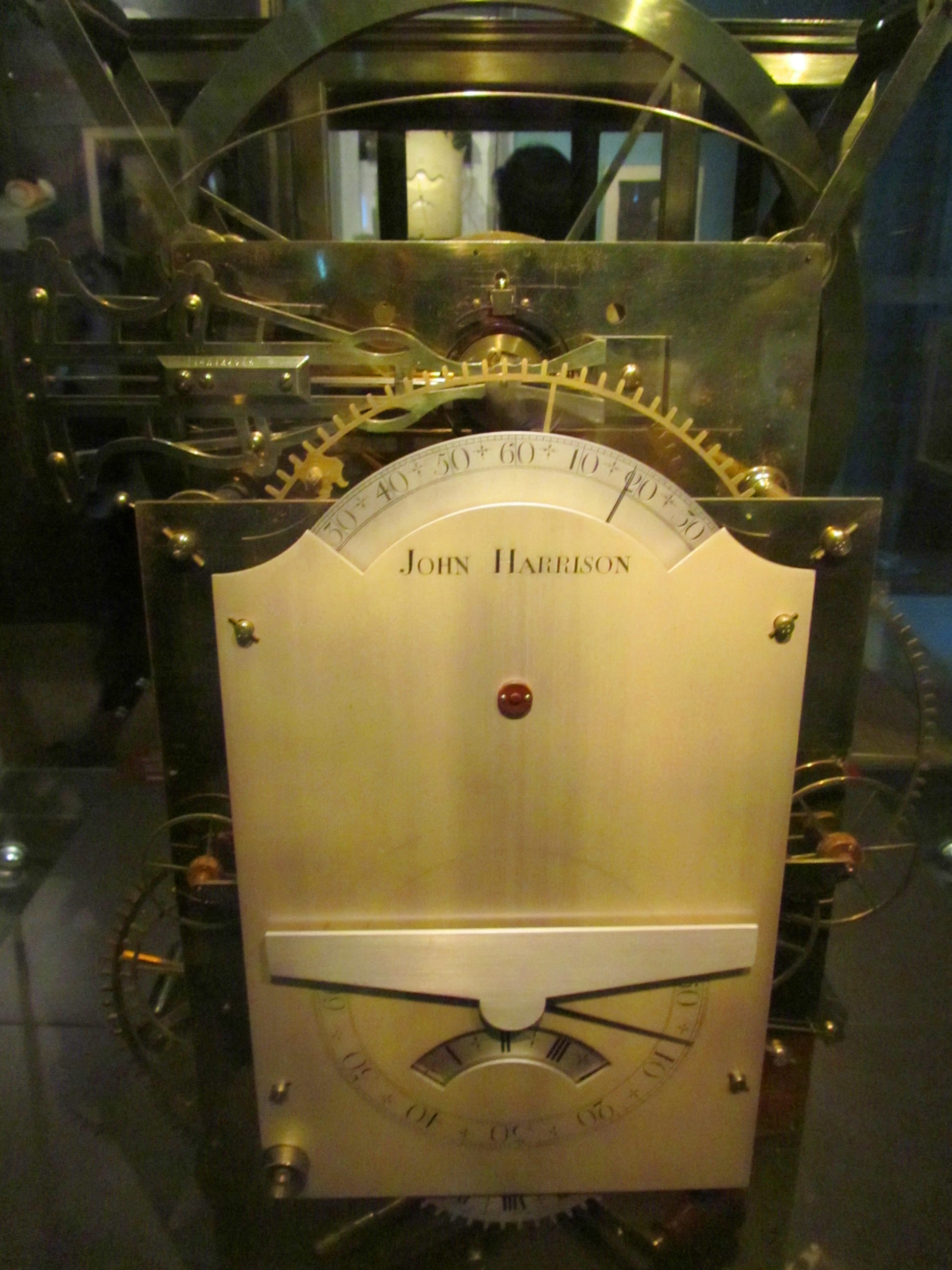
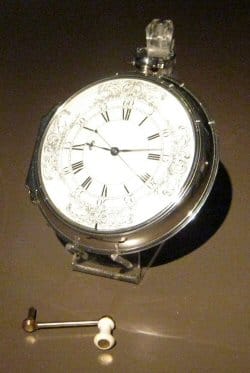
John Harrison's marine clocks (from left to right): (1) H2, ©image by Jonathan Cardy - Own work, CC BY-SA 3.0; (2) H3, ©image by Bin im Garten - Own work, CC BY-SA 3.0; (3) H4, ©image by Phantom Photographer - Own work, CC BY-SA 3.0.
What the Harrisons did not know was the state of the issues how the commission was seeing it. There were two silent but impactful factors:
- the commission had already spent a huge sum on smaller prizes for partial solutions – it’s said the sum was twice the largest single prize
- the commission knew about an alternative solution to the problem: measurements based on a position of the moon (this solution would appear less convenient but it was not a known fact at the moment, while the method was also a potential candidate for the award)
As a result, the commission first said this test was not sufficient enough and they would need to take the clock for another journey. After that journey, they agreed to award John Harrison with £20 000, £10 000 of which were to be paid at once, and another £10 000 …after the clockmaker would completely describe his method and the clock mechanism, so that other makers could also build such tool.
John Harrison never received the full prize. Meanwhile, captain James Cook and many others completed their voyages with at least one of the Harrison’s marine clocks or chronometers on board.