
How was not music out of politics a century back? A very brief case study
Bach is better than Mendelssohn.
That’s not what we genuinely think but what the Nazis claimed. Sure, classical music is not what the majority of us think about when it comes to the Nazis, though it probably does not mean it should be dismissed.
The Third Reich viewed music as a powerful instrument and aimed to select the best creators and compositions to make them part of the "Aryan culture." You know, the devil was in the details. To choose the best they did not even need a piece to listen to: a musician’s family tree would tell it all.
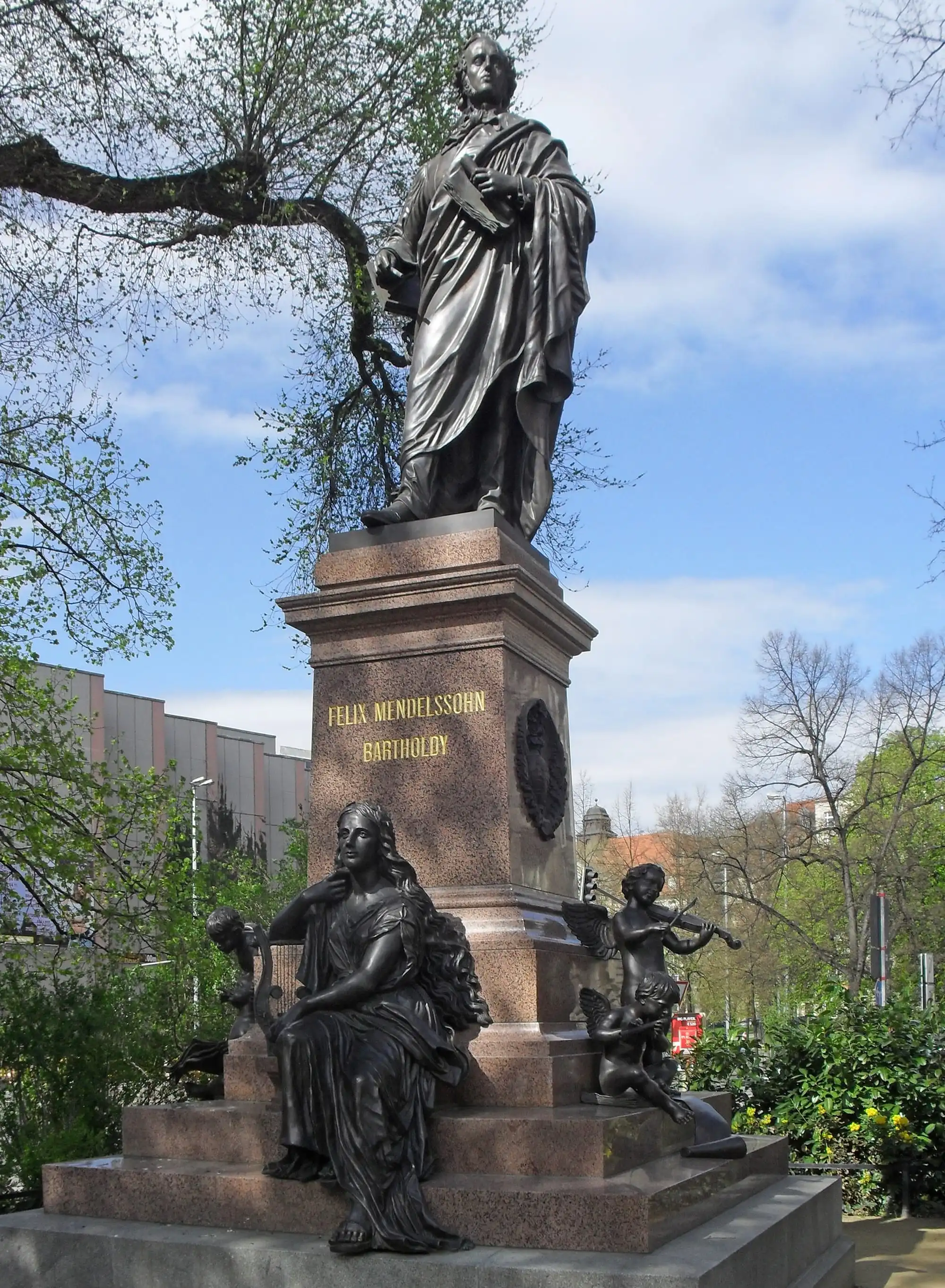
The re-erected monument to F. Mendelssohn in Leipzig. ©Image by LIU - Own work, CC BY-SA 3.0, Wikimedia Commons
From this perspective, J.S. Bach with his centuries-long German roots was an ideal character. As a result, his works were widely played during ceremonies and parties, commemorative events were organised and attended by the highest representatives of Germany controlled by the Nazi Party.
With no aim to diminish Bach’s talent and achievements, let’s see what the situation was like for Felix Mendelssohn.
He proceeded from a Jewish family, both his mother and his father were Jews. No surprise, Felix was brought up according to Jewish traditions and liked them enough to reject his father’s idea of adopting the surname "Bartholdy" (which would sound more natural to the locals) for daily and professional life.
Almost automatically the heritage left by Mendelssohn became not just unwelcomed but banned when the Nazis came to power in the 20th century. His works were claimed to be too sentimental and stay too far from reality, and his already well-known Midsummer’s Night Dream and Wedding March were suddenly sent to be rewritten by "approved" composers of the 20th century. Together with that,
- the Mendelssohn Scholarship established by the composer’s friends and admirers 23 years after his death was discontinued (as would appear later, for almost 30 years);
- dedicated monuments and statues in Düsseldorf (where Mendelssohn had been working as the orchestra director) and Leipzig (where Mendelssohn had died) were removed and destroyed. The replacements were erected in 2012 and 2008, respectively.
Just think about it: the composer faced discrimination which had nothing to do with his professional abilities, while not having been alive for more than 80 years by that time. On a good side, people had loved Mendelsohn’s music too deeply to let it vanish from history.