"He's the madman, I'm the comic. But it could have been the other way around."
The Eiffel Tower had just been constructed in Paris and not yet opened to the public, Van Gogh was working on The Starry Night, and two boys to change the worldview of millions were born four days apart in 1889.
Neither Charles from London nor Adolf from Braunau am Inn (then Austria-Hungary) were first kids for their parents, but both were surviving extreme poverty in their childhood or adolescence.
A huge part of his childhood Charles spent close to or on the stage, surrounded by singers, dancers, and actors due to his mother being a professional performer. Meanwhile, Adolf’s father did not want to see his son as a singer or an artist (despite the boy’s attempts to master the skills), and the differences in their views were causing more and more parent-child conflicts.
Years later Charles Chaplin would make millions of people laugh without saying a word while Adolf Hitler would start converting his power into dictatorship and ruin millions of lives shouting his orders out.
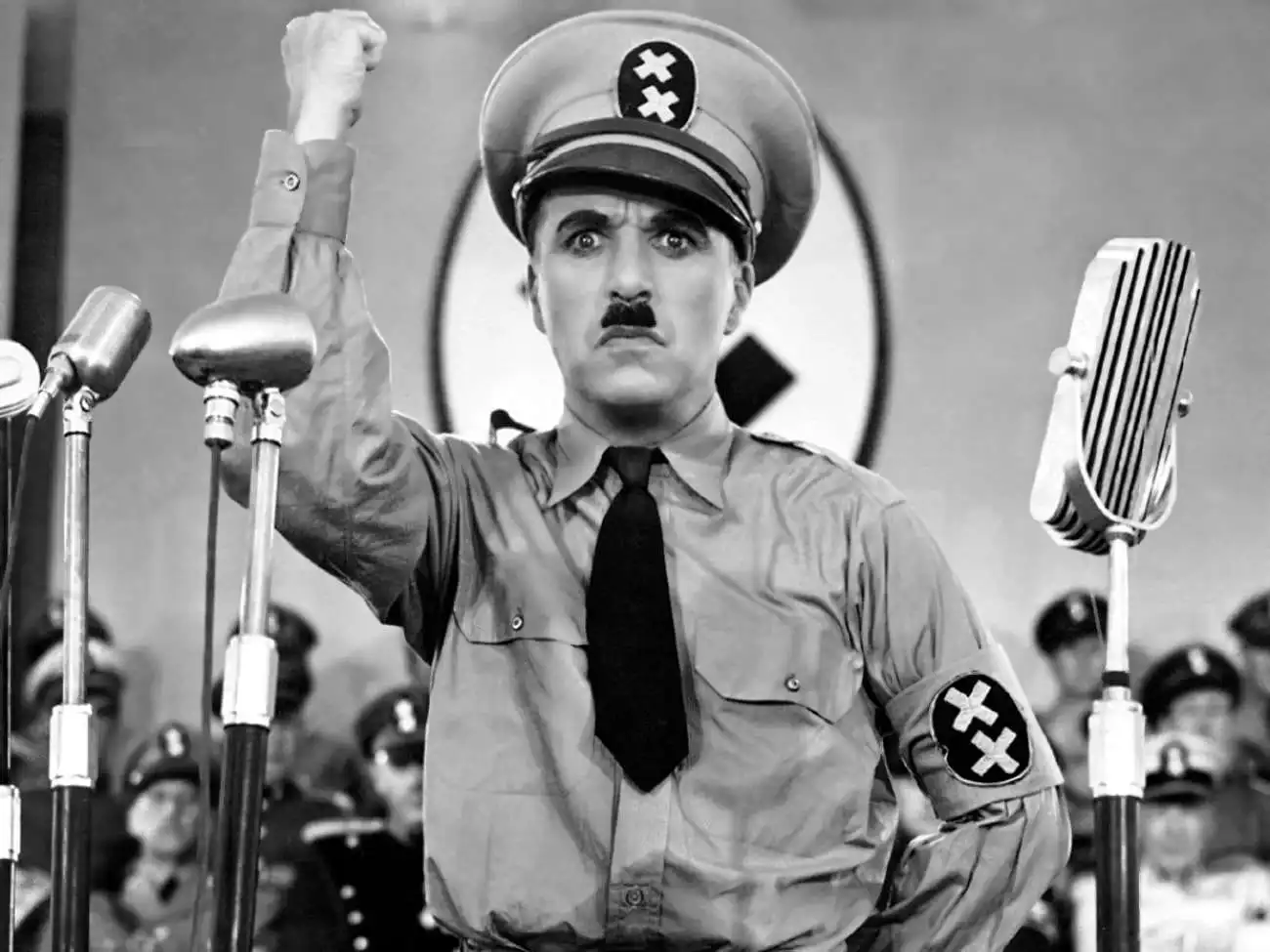
Chaplin in the film The Great Dictator (1940)
Chaplin’s biggest power was laugh, so he started a scenario for a satirical black comedy film to condemn the dictatorship arisen in Europe by that time. It happened so that the very filming process began a few days after the first bomb had marked the start of World War II and lasted for the other six months.
The Great Dictator put an end to Chaplin’s silent films and changed how his widely loved character of the Tramp was perceived. It also became the actor's most commercially successful work. Later though, Charles Chaplin would claim that were he aware of the real extent of cruelty people were experiencing during the war, he would have likely given up the whole idea of the film.
There are no recorded data on whether the main prototype of the film Adolf Hitler saw it, but according to unofficial statements, the dictator watched the film twice, alone and in silence.
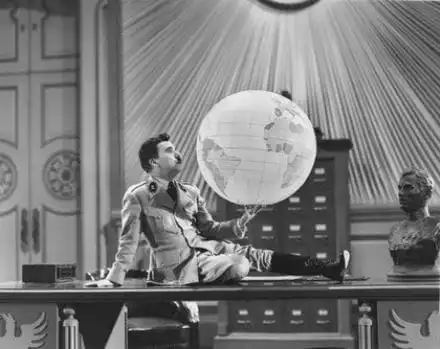
Chaplin in the globe scene, a screenshot from The Great Dictator (1940)
"Just think, he's the madman, I'm the comic. But it could have been the other way around."
Charlie Chaplin
Final speech from The Great Dictator (1940)