
So was he a madman or a genius?
The question itself arises from the director's of Barcelona Architecture School words which he said when handing Antoni Gaudí his degree,
"We have either given a diploma to a madman or to a genius.
Time will tell."
Today, Gaudí’s brilliance is celebrated noticeably more than he is criticised but it was not always the case. For instance, two famous Spanish painters Salvador Dalí (also a Catalan) and Pablo Picasso (an Andalusian) had opposite opinions about Gaudí’s designs.
Dalí was one of the greatest fans, expecting centuries to pass before another one like Gaudí would occur.
“In Passeig de Gràcia you will find sensational examples of this type of delirious architecture, true solidified Debussian music.”
(S. Dalí, To Spain, guided by Dalí. Vogue, 1950)
Meanwhile, Picasso would easily share a bar with Gaudí (Els Quatre Gats in Barcelona has the notes in its history) but never a table. He had little good to say about the architect.
“Send Gaudi and the Sagrada Familia to hell…”
(from P. Picasso’s letter to a friend)
When giving his assessment, Gaudí’s headmaster most likely referred to the student’s knowledge of the field and professional abilities rather than to Gaudí as a personality. However, in real life, these are often strongly intertwined. Let’s see what was so special about Gaudí asa master and where his uniqueness could have come from.
Love for nature
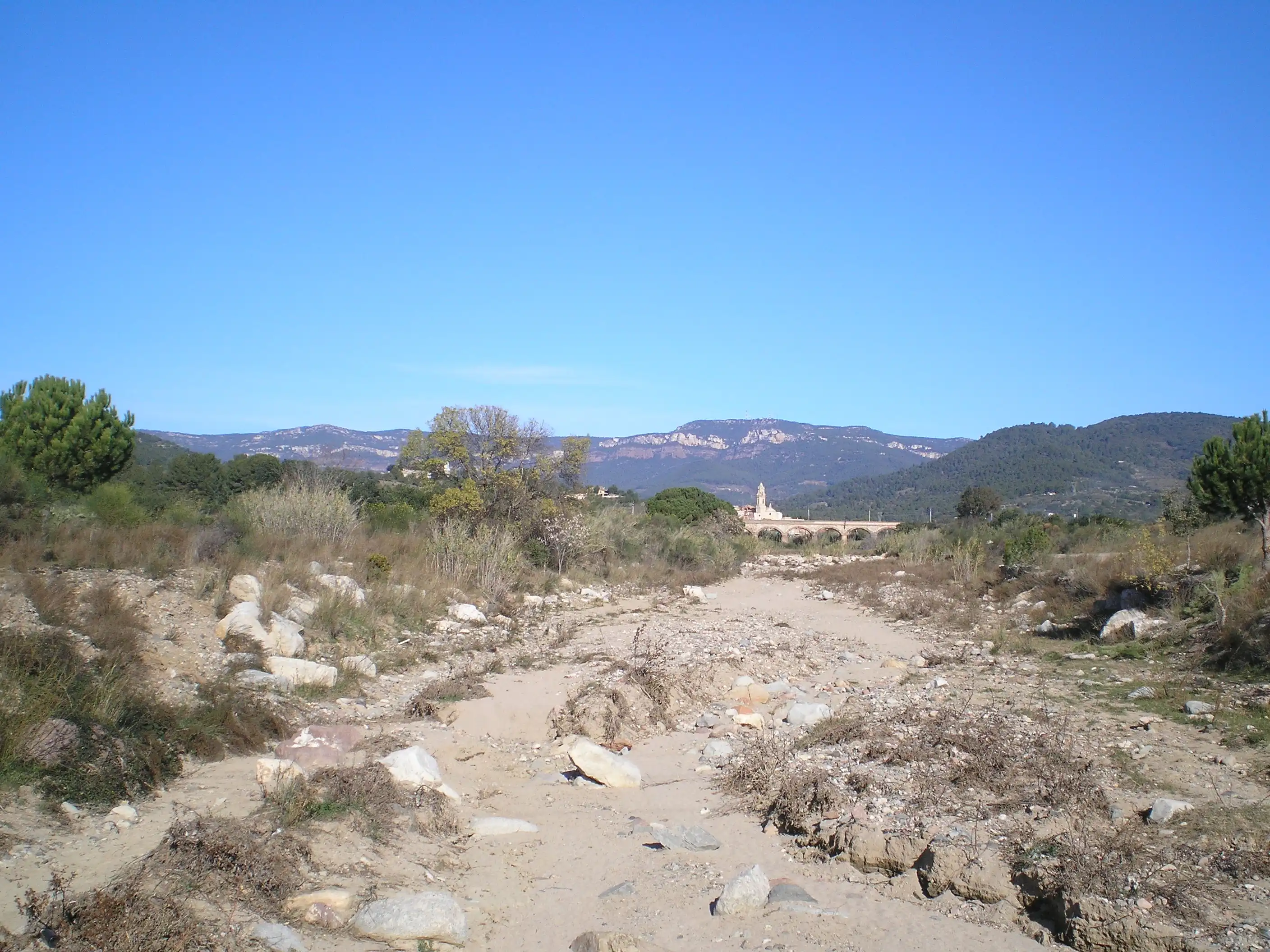
Riera de Maspujols (Eng. the Maspujols stream).
Image by Jordi Gili, CC BY-SA 4.0, Wikimedia Commons
Look at this image. This is the landscape little Antoni had in front of him since his very birth and as a child. Massive mountains, rocky paths, wild greenery, and the railway viaduct as a rare technical sign of progress in the region.
You’d probably expect something more intricate to be Gaudí’s inspiration – Mediterranean trees and flowers, see creatures, variety of colours and forms. Gaudí will see it all at his 20s, when relocated to Barcelona, and as a child, he just had a pleasure to observe light and shadow dancing in the mountains.
In his work, Gaudí will rarely imitate the childhood landscapes but will often come to towering forms, unpredictability of shapes, and absence of straight lines. It’s likely from those times he’d know for sure that if something works in natural surroundings, there must be a way for a man to recreate it, and chances are that it will work even better than pure human engineering.
“The great book, always open and which we should make an effort to read, is that of Nature.”
A. Gaudí
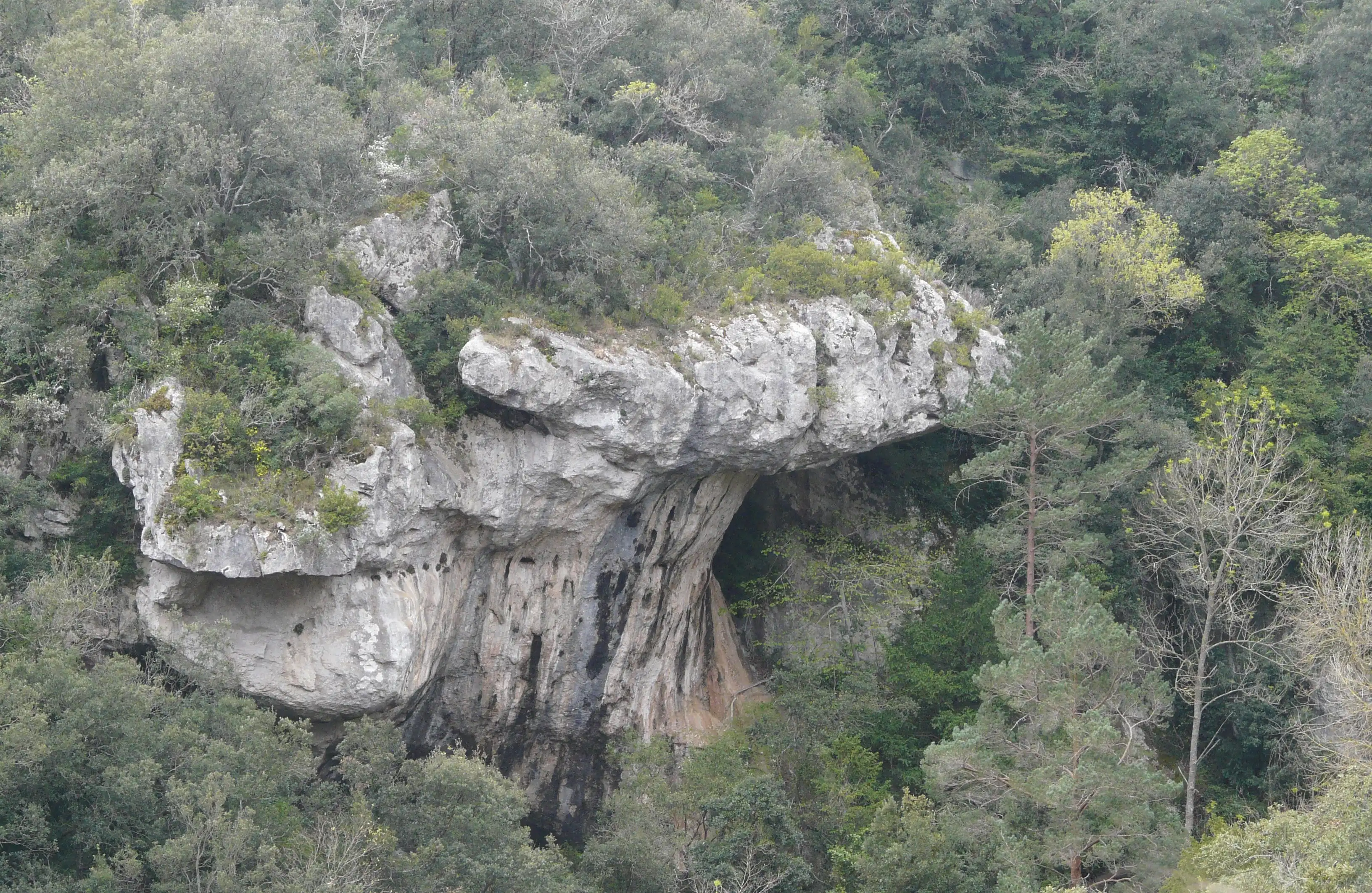
A natural area in Catalonia, Spain.
Image by Pere López Brosa, CC BY-SA 3.0, Wikimedia Commons (cropped)
No doubt, many of Gaudí’s works look crazy for their asymmetry, wavy contours, cave-like entrances, breathing structures, and mind-blowing allusions. Here, the visible part of madness met the genius behind the curtains: for a number of constructions, Gaudí would rely on natural gravity rather than on complex calculations. He would suspend strings and weights from the ceiling and let the force find the ideal curves and proportions.
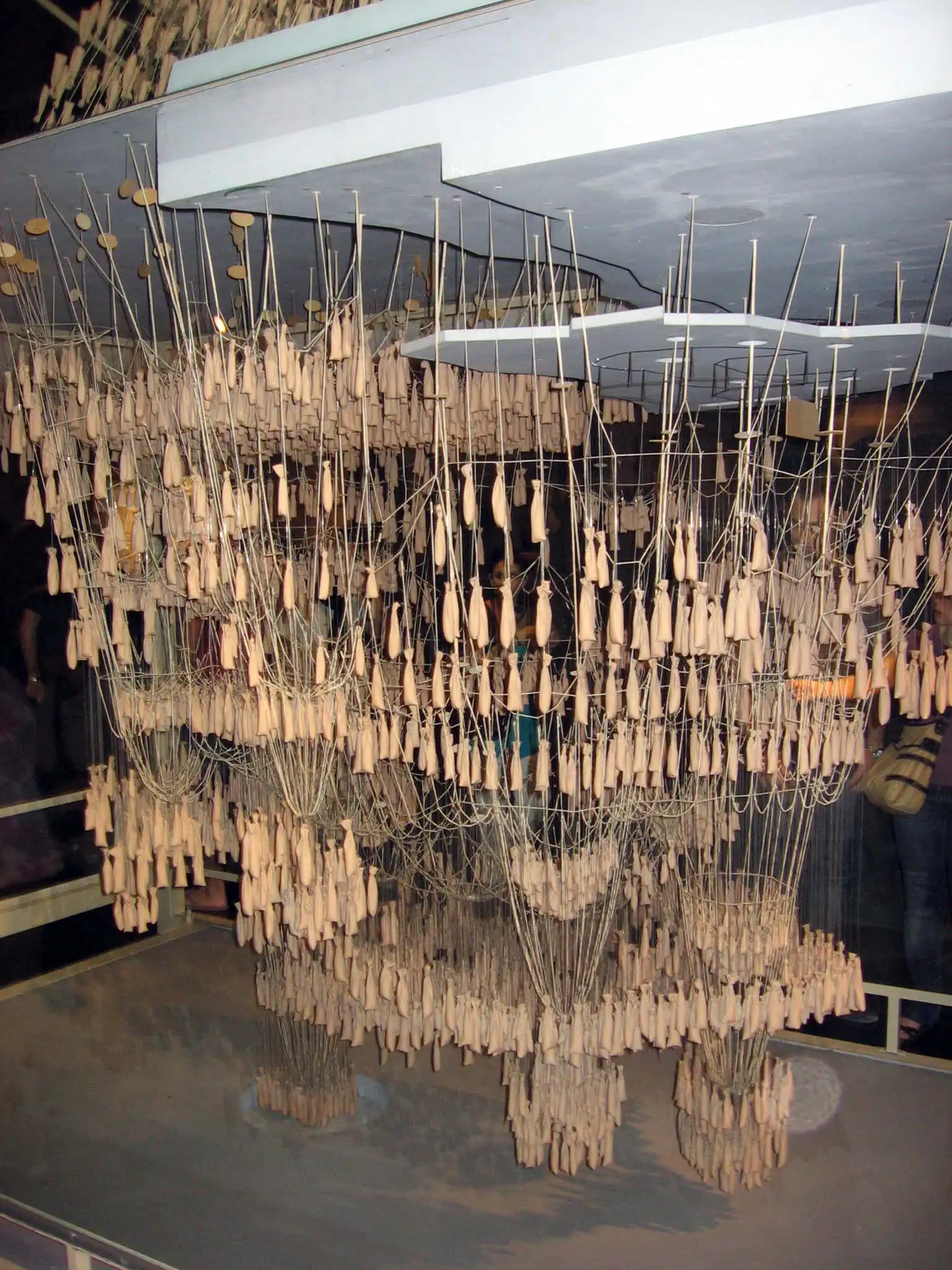
Polyfunicular model by A. Gaudí, the Sagrada Familia Museum.
Image by Canaan, CC BY-SA 4.0, Wikimedia Commons
He used this method to play with a preliminary model of the future building, and to make it easier to visualise the final outline he would just ...put a mirror under the model. The reflection would immediately show the building as if it was standing on the ground.
Knowing the rules and knowing to break them
More or less intuitive, nature-based approach was an important part of Gaudí’s work, though not the only one he applied. Gaudí lived long before the first computer would appear, so all designs would ground on the man’s skills and creativity.
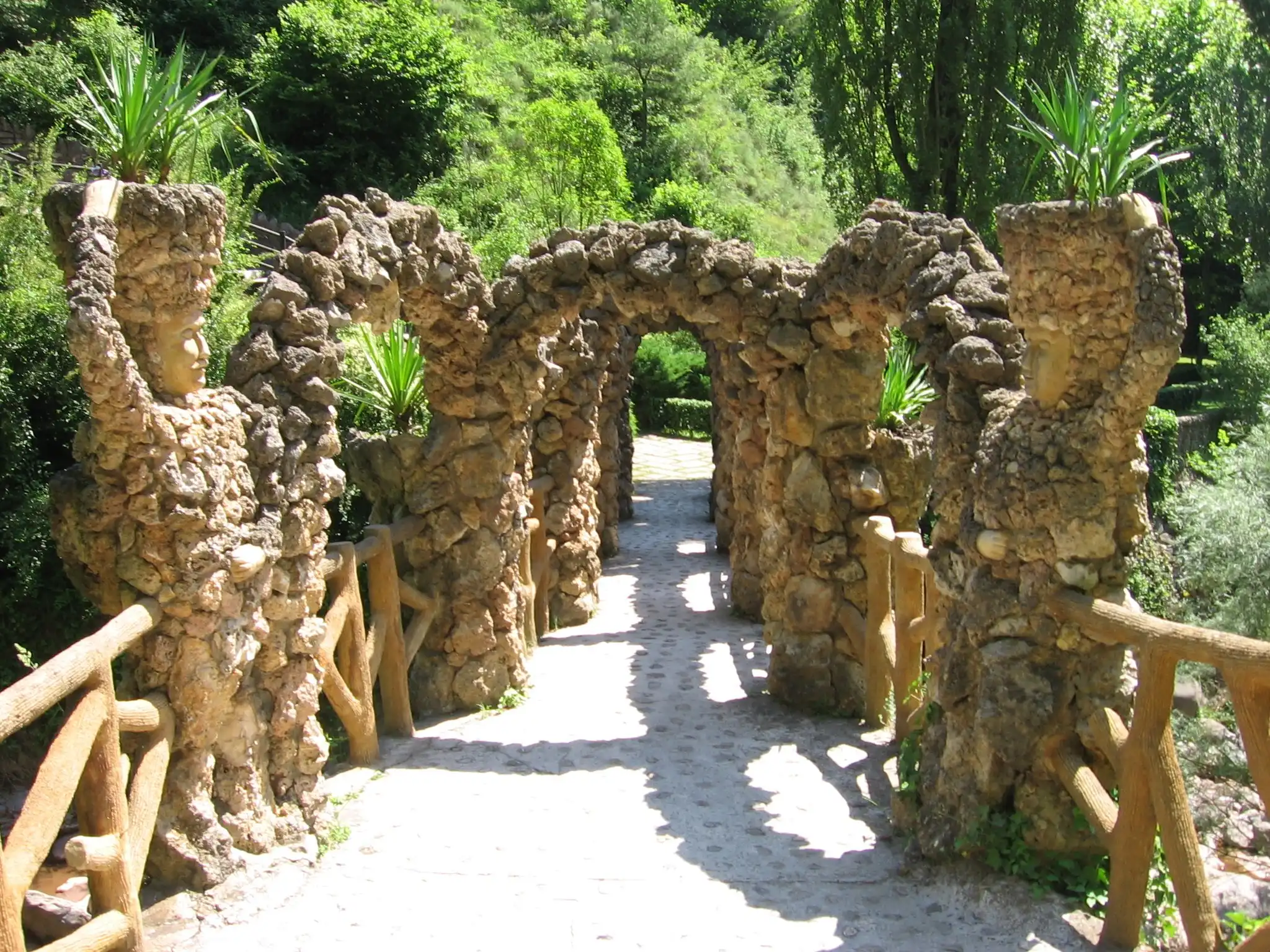
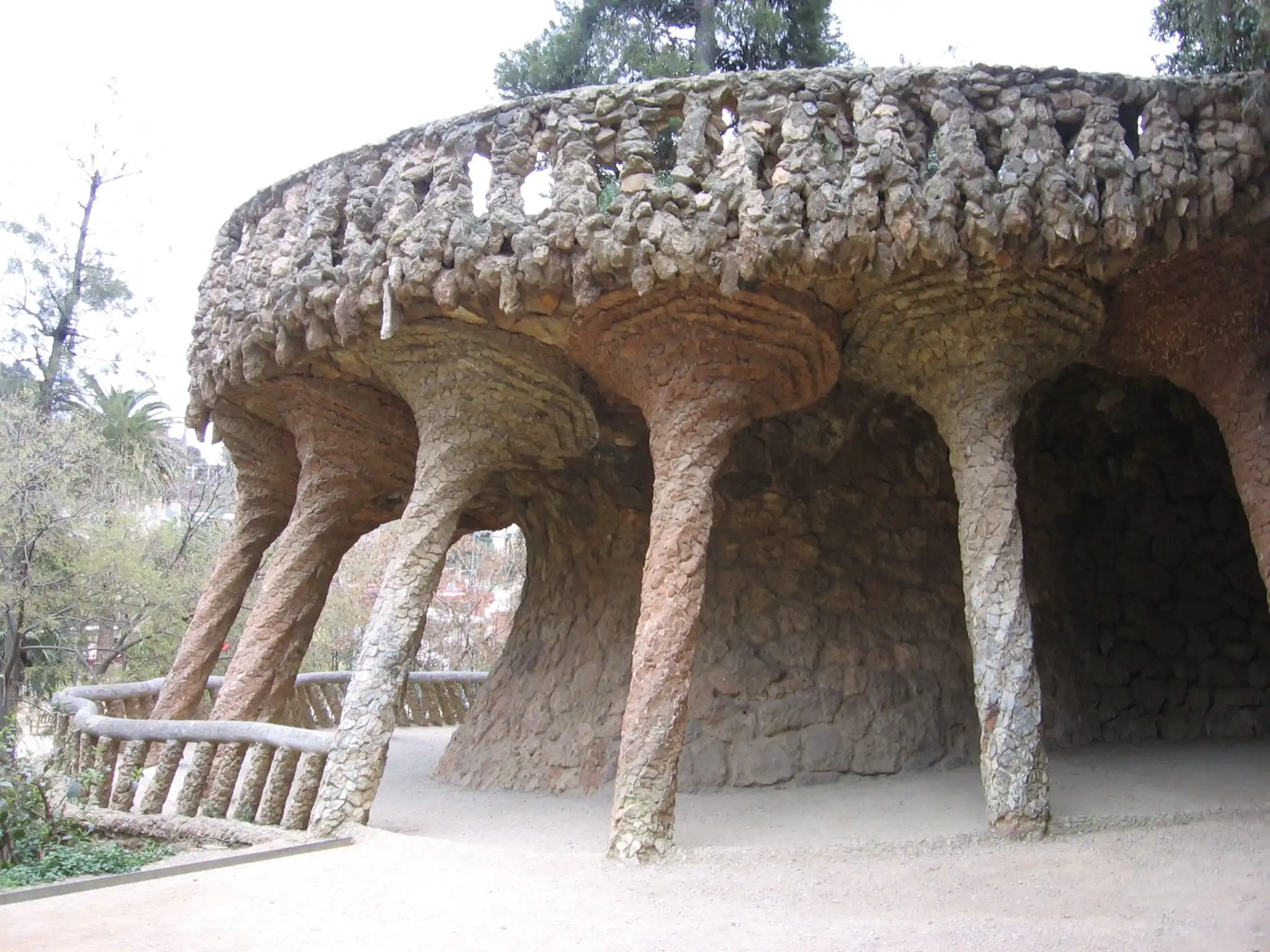
Views from the Artigas Gardens and Park Güell by A. Gaudí.
Images by Canaan, CC BY-SA 4.0, Wikimedia Commons (from left to right): 1, 2.
Antoni Gaudí studied architecture at the specialised school in Barcelona and assisted other architects as a student. In addition to geometry and drawing, he studied history, economics, aesthetics. Equipped with basic knowledge, he found himself ready to go for unconventional solutions: intersecting geometry, fractal-like constructions, and even number symbolism combined with mathematical principles.
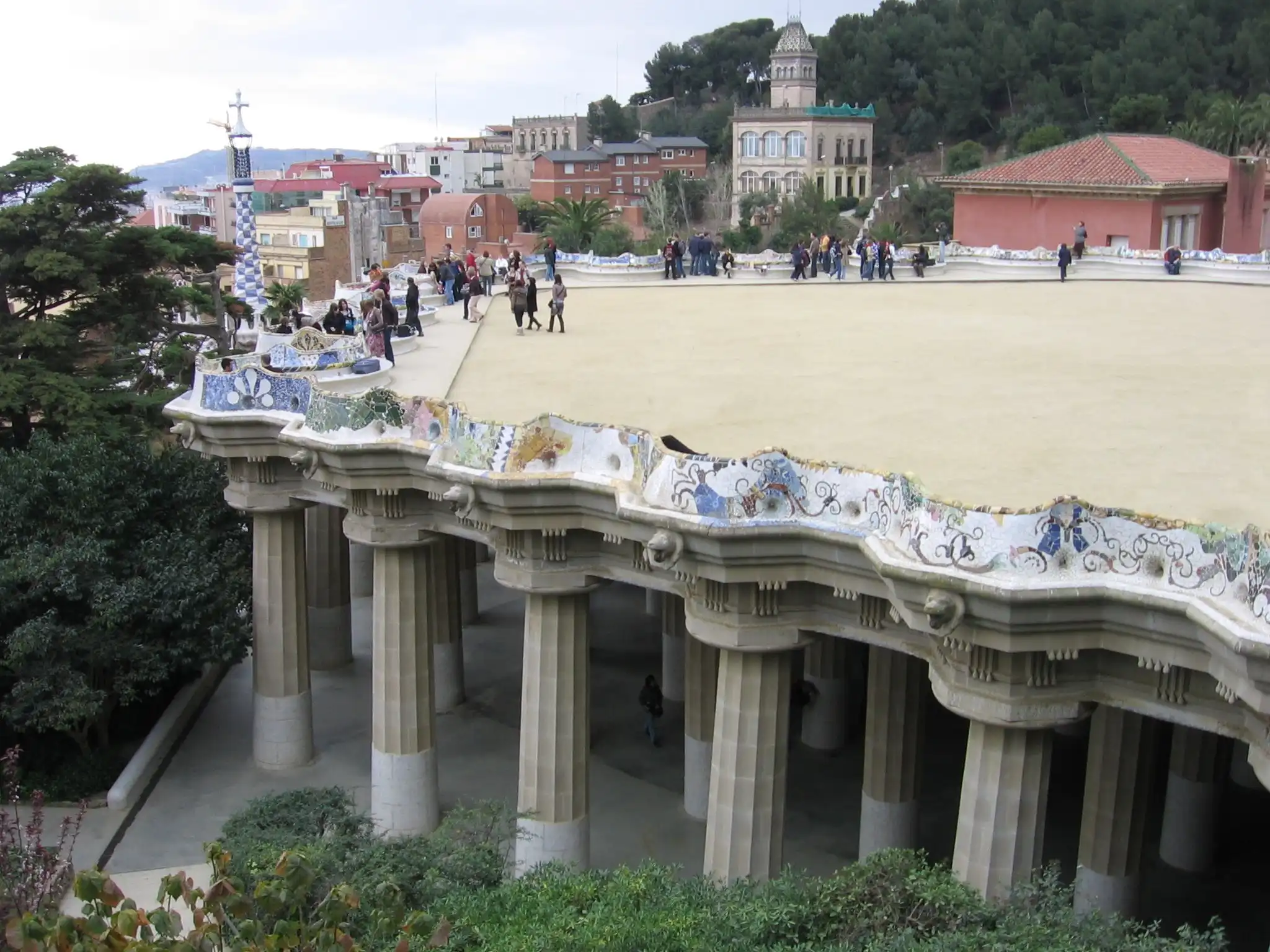
View of Park Güell.
Image by Canaan, CC BY-SA 4.0, Wikimedia Commons
As you can guess, Gaudí ignored many of the architectural standards considered best practices of those days. Flat walls? Mean nothing, and he would like to tell stories with his buildings. Sharp corners? Highly artificial. Unicolour design? For a very special occasion only. Natural light is a must. Colour of stained glass should never be a coincidence.
For his storytelling in stone, Gaudí saw no problem blending nature, folklore, elements of fantasy, history and religion in any possible combination. Should have been brave enough for the beginning of the 20th century as the latest.
“Fantasy and reality are not mutually exclusive. In fact, they need each other.”
A. Gaudí
Sustainability in work and life
Sustainability was not yet a concept but why would it matter when one truly takes their inspiration from nature? To Gaudí, nature was on the top of everything, so it got all possible respect and care from the architect.
When planning a new project, he would think of raw materials of the local origin only. Not only it added to artistic authenticity of the final work but also significantly reduced the cost of production. Gaudí was one of the pioneers who aimed to minimise leftovers. He would rather find another way to reuse building materials, scrap iron, or broken glass for his new projects than write it all off as waste. To the extent of transforming a building instead of demolishing it when the plans had changed!
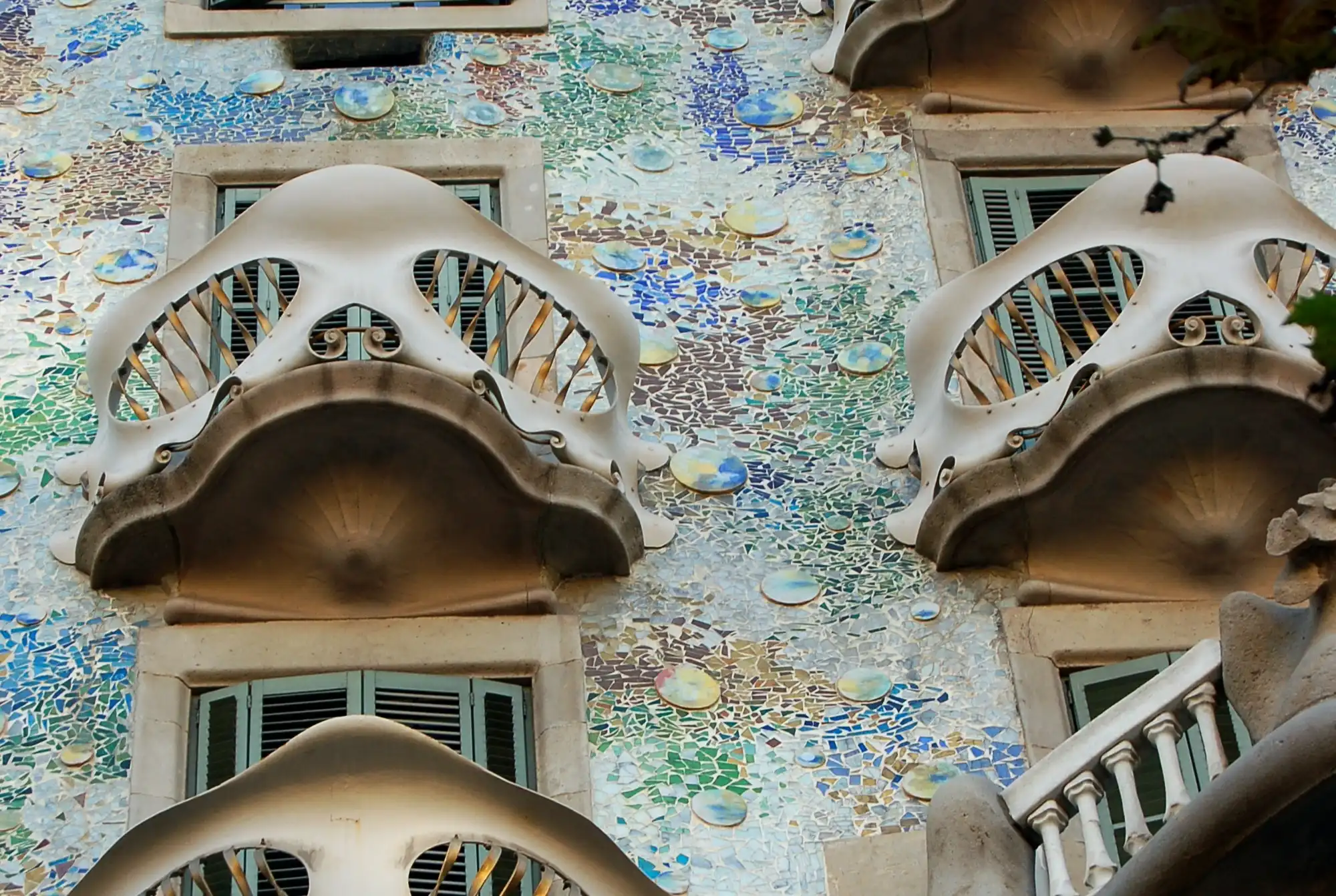
Casa Batlló is a reconstruction of a preceding building (designed by one of Gaudí's professors). And it is just one of the examples of how leftovers became unique decorations.
_-_18.webp)
(1) The façade of Casa Batlló decorated with recycled materials. (2) Scrap iron used to decorate the balconies of Casa Milà – each one is unique!
Images by Alscardoso, CC BY-SA 3.0; MARIA ROSA FERRE, CC BY-SA 2.0.
Gaudí was frequently accused of building something impractical, though the architect himself certainly had his own definition of practicality. He viewed each his large project as a whole system, complex and interconnected. The draughts could of course look overcomplicated but it was also Gaudí’s way to care about both the nature and those who’d look after his masterpieces later.
He inserted viaducts to the newly created landscapes, planned natural ventilation in the buildings (and you will often need time to spot it or re-think the purpose of a certain detail), developed a drainage system to harvest rainwater and use it for plants and fountains, applied knowledge of physics and childhood observations of plants to get rid of water where it was not needed...
By the way, have you ever thought about the Park Güell’s columns being water pipes? And the famous salamander nearby indicating the water level? Look for more about Gaudí managing water issues here!
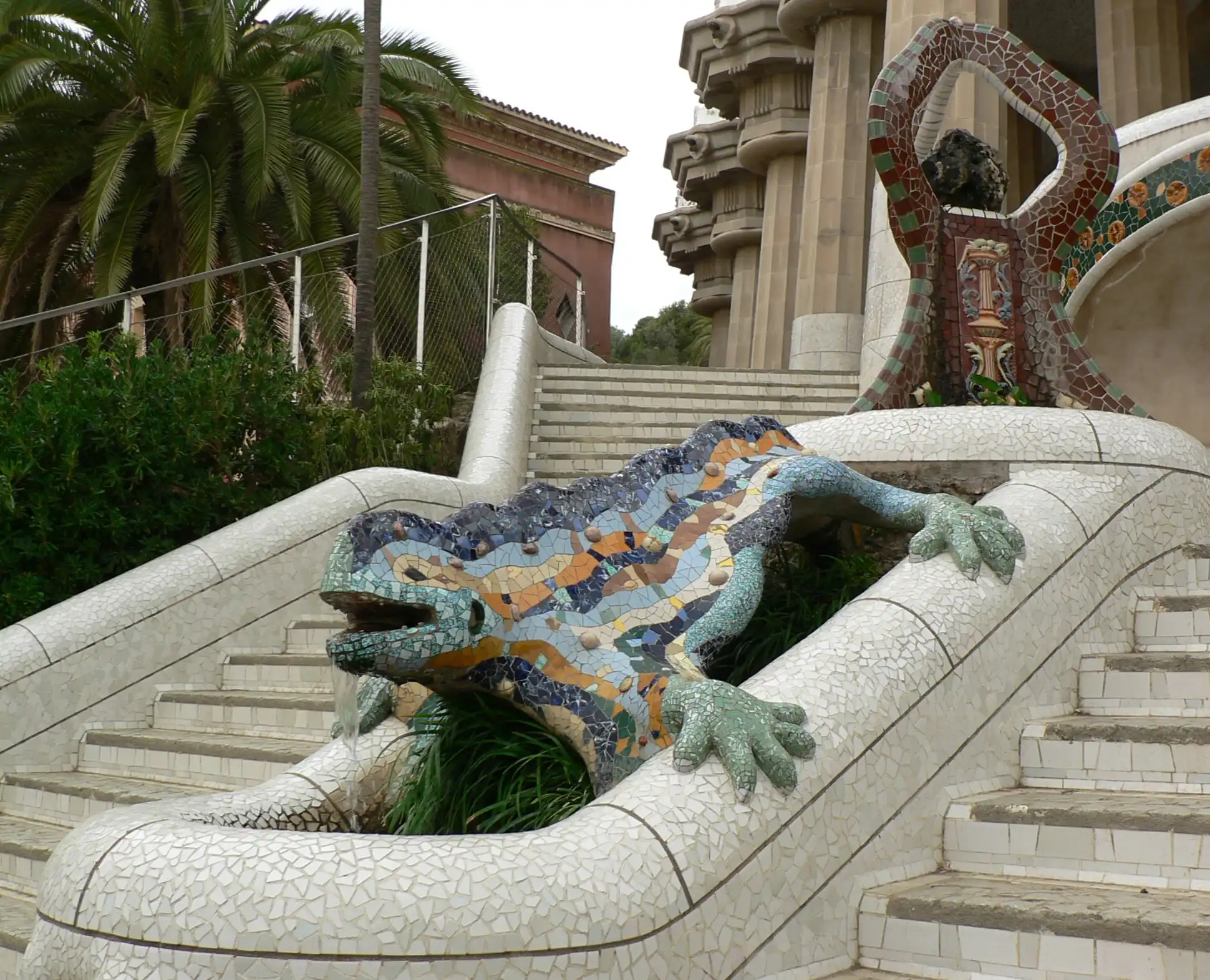
The salamander in Park Güell.
Image by Fabio Alessandro Locati, CC BY-SA 3.0, Wikimedia Commons
Sustainability was not only in Gaudí’s attitude towards nature. At a certain point of life, he made it part of his own essence. In professsional activities, it was a huge ‘no’ from Gaudí to overconsumption – he did not ask for more than he needed. From the perspective of personal values, it probably started when he was rather young and discovered he can function pretty well without meat. Gaudí’s became a vegetarian for the rest of his life.
By his 30s, Gaudí was a well-known master who did not have a day without an ongoing project. The later, the less need to impress anybody or prove his own skills he had, so in the middle of his life he changed the attitude to his own appearance. He felt no interest in brand-new clothes and would prefer a worn-out suit and old shoes. It is this approach which is often claimed guilty of the architect’s death: nobody recognised that very Gaudí in the beggar who became a victim of a road accident one night, so he did not receive qualified medical aid.
Crazy? Maybe. But think about it. What if there were somebody to tell the real name of the “beggar”? Would Gaudí appreciate the decision on whether one should be helped based on the victim’s appearance? Would he approve spending more resources on him than on anybody else just because his name was famous? Why would human’s treatment of each other depend so much on visual impression?
Being one and alone: solitude, independence, uniqueness
By the time that ill-fated accident took place, Gaudí had been feeling lonely for years. He had no family of his own; his siblings passed away very, very early; his friends and colleagues began to follow that way one after the other.
When at his early 30s, Gaudí took the work on the Sagrada Familia and was soon appointed Architect Director. Starting from 1915 (the architect’s early 60s), he would constantly sacrifice all other projects (with a few minor exceptions) to keep working on this church:
- Having no family, he could literally dedicate every minute of his life to this work.
- Professionally independent and creative enough, Gaudí was able to select the best practices from his previous works to merge them here.
- With immense level of responsibility and self-awareness, he thought about making his ideas clear to further generations of those involved in the construction, given that the original blueprints might be lost, purposefully or not. And that’s what actually did happen!
This is how the Sagrada Familia transformed from a “just another project” to the absolutely major work of the architect and – just maybe – his own dialogue with God.
Breathtaking and useless?
With a degree in architecture, Antoni Gaudí was also a furniture designer, sculptor, ceramicist, glassworker, and even a carpenter. His works were seen either as magnificent pieces of art or as useless and ugly designs. He only got decorated once in his life, with the Barcelona City Council’s award for Best Building of the Year (1900). Can you guess for which of his works?
It was Casa Calvet, the building designed to combine commercial and residential spaces.
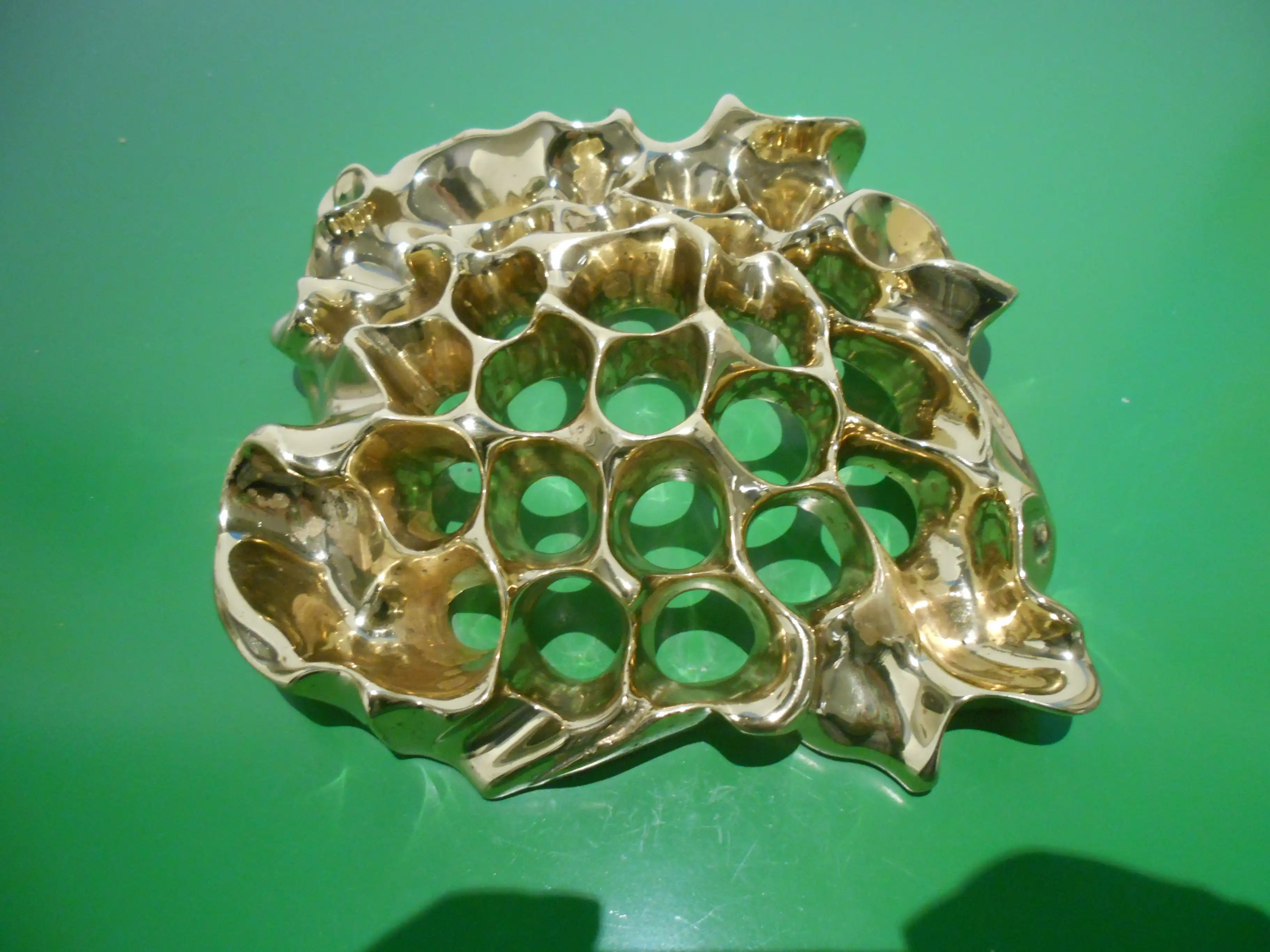
The door spyhole in Casa Calvet by A. Gaudí.
Image by Canaan, CC BY-SA 4.0, Wikimedia Commons
It’s only in the end of the 20th and the early 21st centuries when seven of the works by Antoni Gaudí made it to the list of the UNESCO World Heritage.
The dichotomy of “either a madman or a genius” as such is a good example of black-and-white thinking, which modern science views as a cognitive distortion. There are few fields where it can be successfully applied, although when it comes to human nature – sorry, we do have more than just two sides. And given how it all went for Antoni Gaudí,it seems to be the level of social acceptance, not the subject as such, which ultimately defines whether it belongs to insane or exceptional, if not common.