His hometown was changing countries. What was his life like?
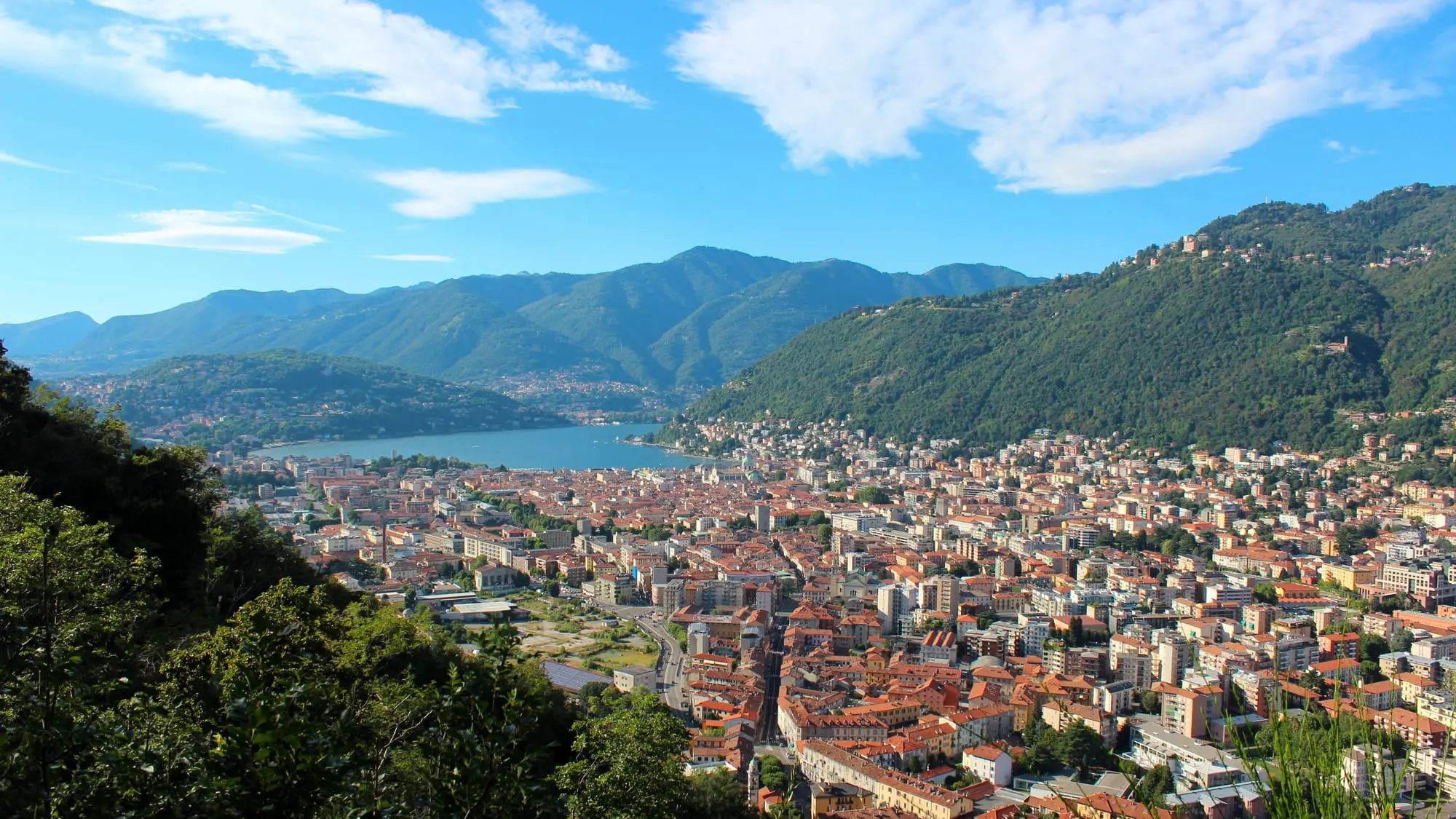
His full name is Alessandro Giuseppe Antonio Anastasio Volta and it leaves no space for doubts in his Italian origin. His hometown is Como, a city surrounded by mountains in the north of Italy where it borders with Switzerland – at least, that’s how we know it today. For Volta himself, Italy was not a birthplace. Partly, because there was no country named "Italy" yet and partly, due to succession crises impacting the region.
About 280 years ago, in 1745, the future scientist and inventor was born in the Duchy of Milan. It used to be a state counting its history since 1395, when in 1707 the Duchy became a possession of the Habsburg Empire (or the Austrian Habsburgs). And formally, the Austrian monarchy was the country where Alessandro grew up.
In his adolescent years, Alessandro Volta was way more interested in science than in politics. By that time, many reforms had been implemented and living under the rule of the Habsburgs, whether satisfactory or miserable, became a norm. Still and all, Alessandro was born with it and had nothing to compare to yet.
For 50 years the life in the Duchy of Milan would be stable and Milan itself would be prospering. And so would A. Volta’s career be.
- By his 15, he had defined what he would like to do in life – he was going to become a physicist and work with electricity, despite his uncles and teachers convincing him to go in for law or theology. Luckily, his childhood friend who was four years older and also curious about science, shared his home laboratory with Alessandro.
- By his 25, he had authored his first scientific paper on electricity.
- A. Volta was not even 30 when students of the Como Royal School got to know him as a professor of Experimental Physics , and at his 35, he was appointed to the Chair of Physics in the University of Pavia - that very university where Leonardo da Vinci had been studying anatomy more than 260 years before and where Alessandro Volta would stay for lectures and experiments for more than 40 years.
- At his 30s, he made his first trip to Switzerland where he talked to the founder of alpinism and modern meteorology H.B. de Saussure, the philosopher J.-J. Rousseau, and "the father of modern physiology" A. von Haller.
- At his early 40s, A. Volta could say that he had made some of his most important discoveries and inventions in his scientific career. He improved design of a manual electrostatic generator (electrophore , created about 10 years earlier by a Swedish physicist Johan Carl Wilcke); during a lake trip, he discovered "inflammable air" (we know it as methane); he created (eudiometer), an instrument to measure the "goodness" or the "breathableness" of air and to analyse flammability of gases.
- At the late 40s, the scientist travelled around Europe and significantly developed his professional network by meeting other scientists like G.-L. Leclerc de Buffon, P. S. Laplace, A.-L. de Lavoisier and B. Franklin.
A. Volta had created an electrometer and an electroscope (a "condenser" of electricity), elaborated a predecessor to the telegraph, involved himself in a scientific dispute with Luigi Galvani (which became the rationale for the A. Volta’s Copley Medal), got married at his 51 and had two of his three children born when ...the Napolean army entered the Dutchy of Milan.
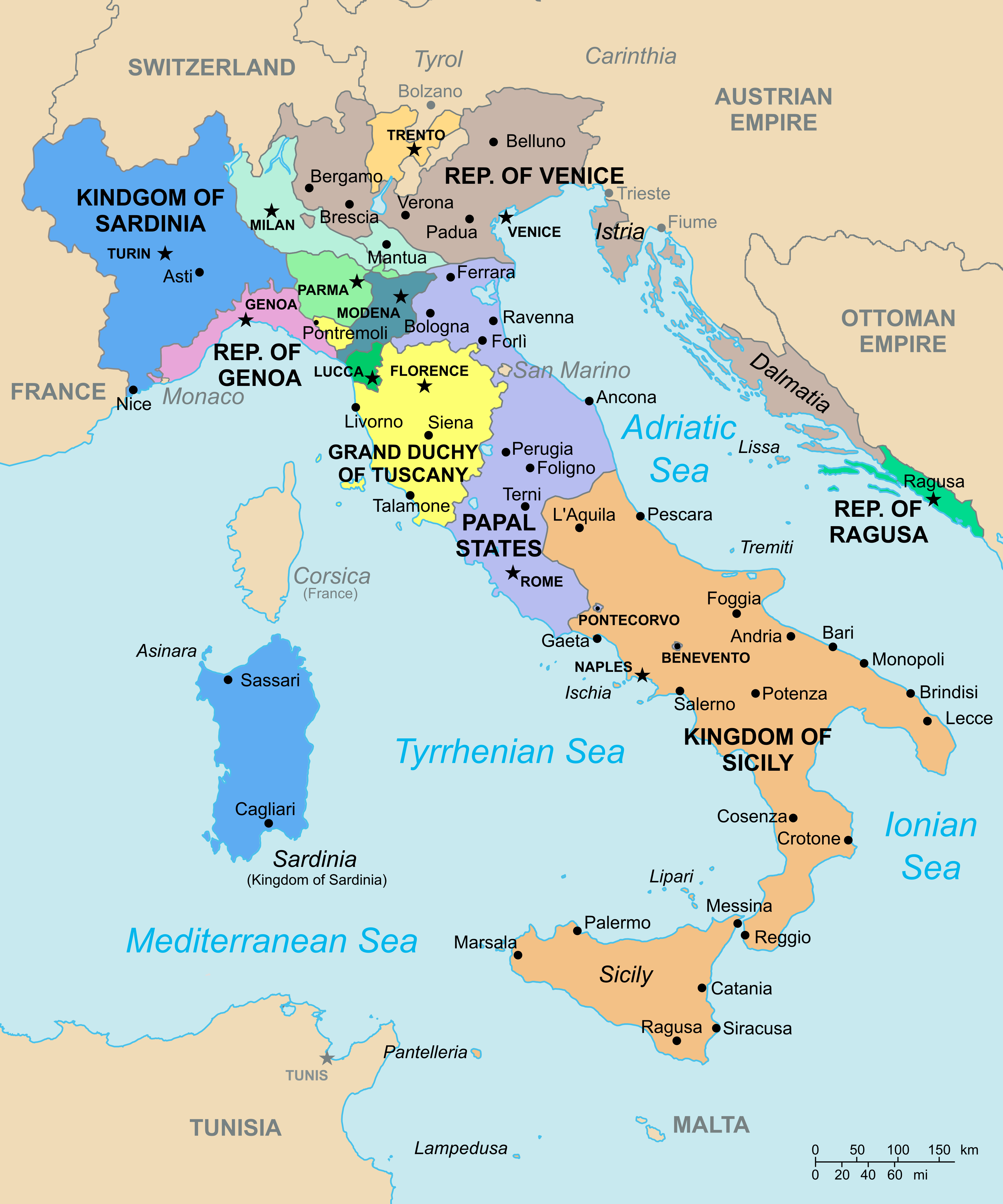
Italy before the Napoleonic invasion (c. 1796). ©Image by User:Shadowxfox; derivative work: User:Enok - CC BY-SA 3.0, Wikimedia Commons
The troops damaged the laboratory where A. Volta had used to work which must have been quite an issue for the physicist's further work. But history is often about people, their views and attitudes: Napolean Bonaparte highly appreciated Volta’s achievements, so he praised and awarded the scientist as generously as he could. Volta, nevertheless, claimed to be more loyal to Austrian rulers – either due to his first-hand life-long experience of their reigning, or just based on his observations of the political life in the region. The position allowed him to stay free and to avoid any penalties from the Austrian side when in three years they returned to the city.
Already a year after that, the region was again controlled by the French. A. Volta was re-accepted to the University as a professor. Napolean continued to express his admiration for the scientist, invited him to visit Paris with scientific demonstrations, praised him with a higher salary, appointed to a newly founded Institute in Bologna (would relocate to Milan in 13 years), awarded him the recently established Imperial Order of the Legion of Honour (then the highest order of merit in France). He even managed to make A. Volta a senator of the Kingdom of Italy as a part of the Napoleonic Empire!
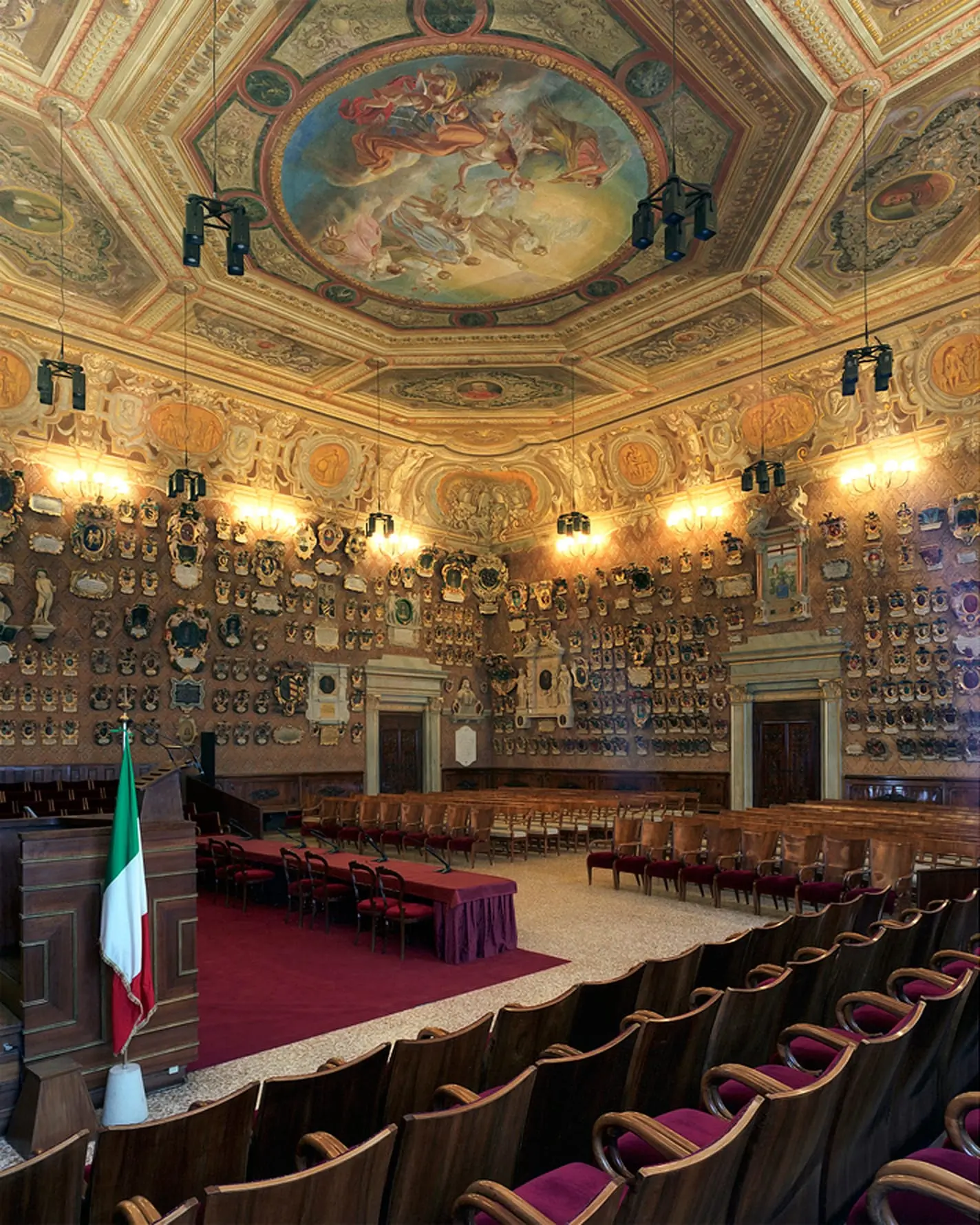
Aula Magna in the University of Padua. ©Image by M.Danesin/Università degli Studi di Padova - This media was produced by the International Astronomical Union (IAU), under the identifier iau0923a, CC BY 4.0, Wikimedia Commons
...In his turn, the Emperor of Austria would appoint A. Volta a director of the Philosophical Faculty of the University of Padua – the one which Nicolaus Copernicus had attended and where Galileo Galilei had once been the Chair of Mathematics. Alessandro Volta was 70 at the moment, and in less then five years he decided to retire and dedicate himself to private life.
But before that, and during the whole process of geographical, political, and administrative changes in the Dutchy of Milan, A. Volta never quit science. What’s more, he made his most famous invention of the so called "artificial electric organ" (we commonly know it as a battery) right during the hottest period of the French-Austrian attempts to establish their control in the north of the modern-day Italy!
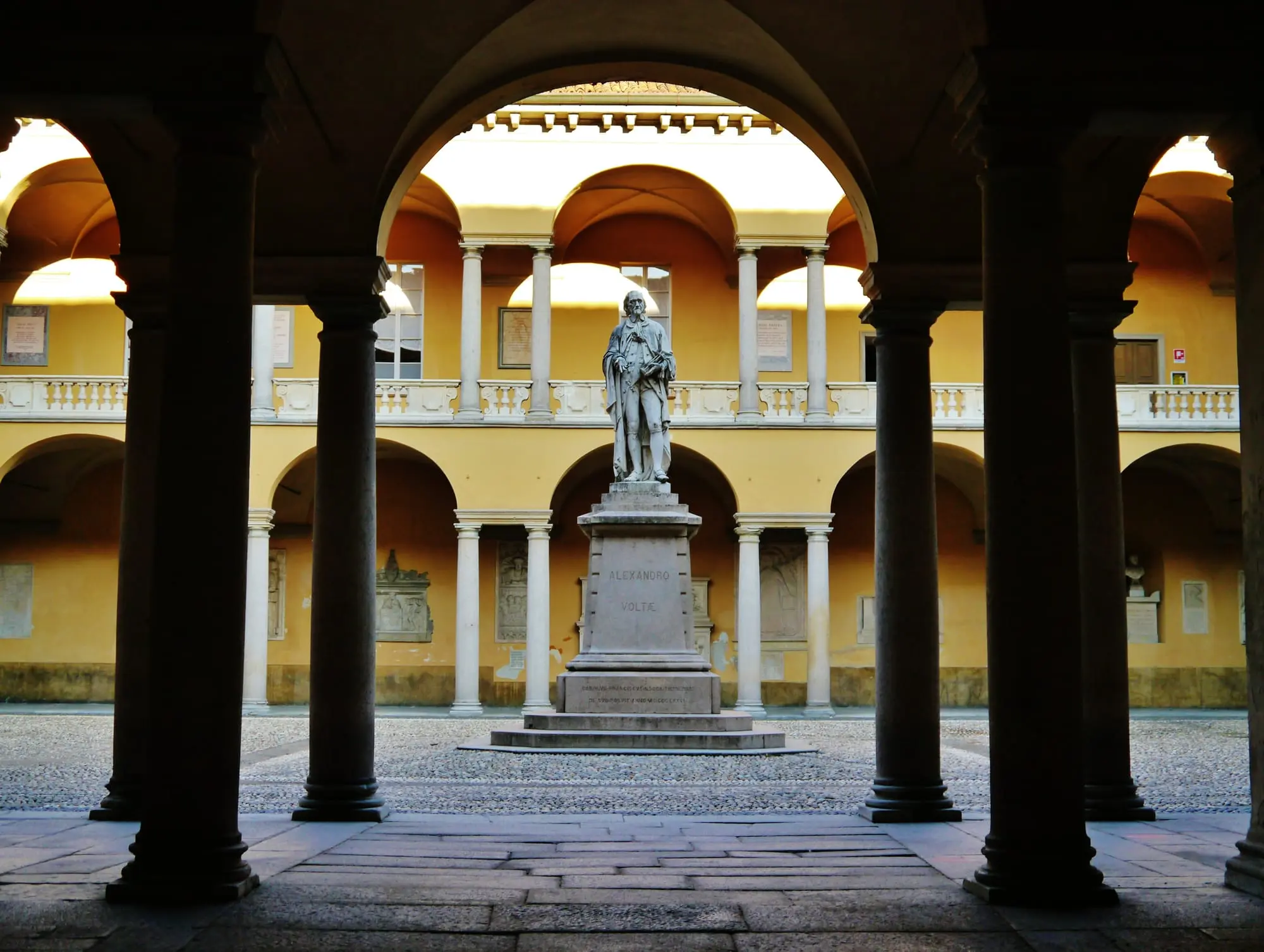
The Statue of Alessandro Volta in the University of Pavia. ©Image by Zairon - Own work, CC BY-SA 4.0, Wikimedia Commons
Alessandro Volta made his last breath in his hometown of Como which was a part of the Austrian Empire in 1827. The Kingdom of Italy would become a nation-state 34 years later, making March 17th the Anniversary of the Unification of Italy till nowadays.